

When comparing a walker vs gait trainer, the main difference comes down to how much physical support the user requires to stand and move safely. A standard walker works well for someone who has basic balance and arm strength, while a gait trainer offers substantial postural framing for people who cannot bear full weight or control their upright posture on their own. Physical therapists and occupational therapists often help families match each person with the right device for their daily routine.
Both tools serve a valuable role in keeping people active at home and in rehabilitation centers. Understanding the features of each option helps you and your loved ones make comfortable, well-informed choices for everyday mobility.
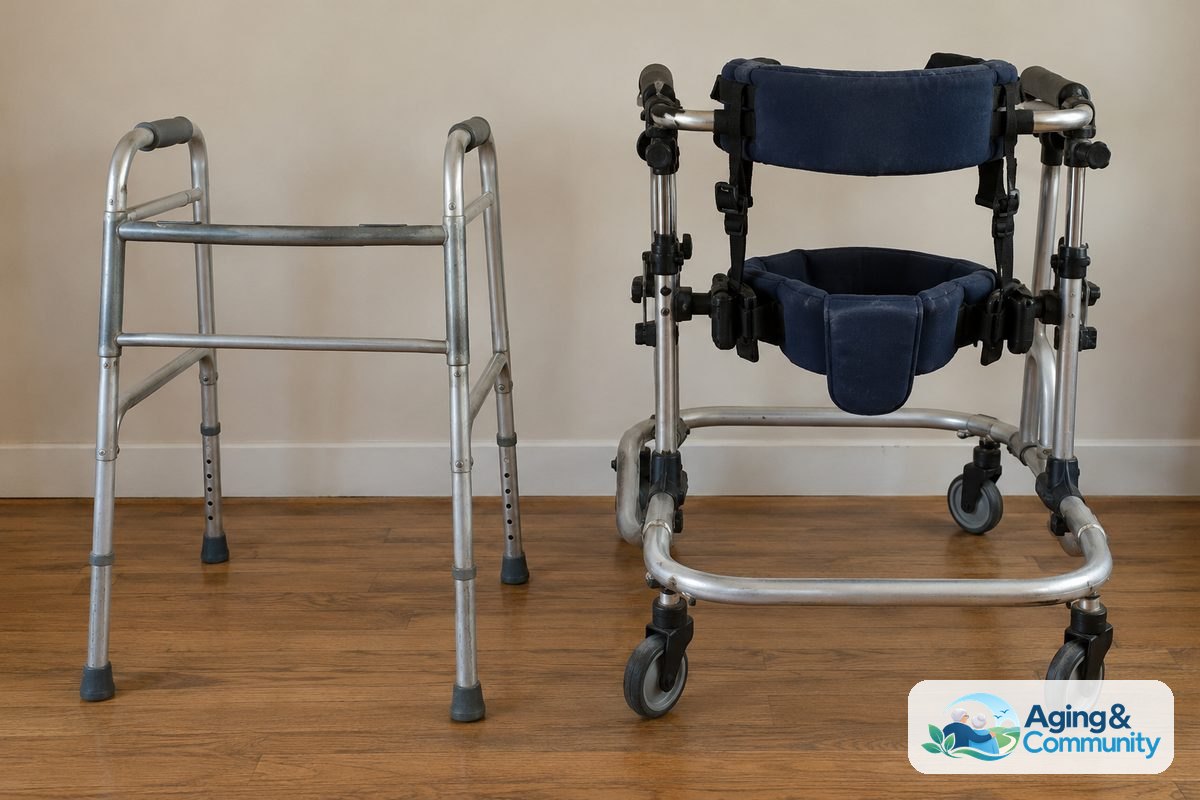
Walker vs Gait Trainer Comparison
Here is a side-by-side look at how these two mobility devices differ in everyday use, build, and support levels.
| Feature | Standard Walker | Gait Trainer |
|---|---|---|
| Primary Purpose | Balance assist and light stability during walking | Active postural support and upright retraining |
| Weight-Bearing Support | Requires the user to bear most of their own weight through legs and arms | Supports partial to full body weight through harnesses and prompts |
| Frame Structure | Simple metal frame with handgrips and optional front wheels | Larger frame that surrounds the user with multiple directional wheels |
| Accessories and Attachments | Basic accessories like baskets, glide skis, or simple trays | Chest prompts, pelvic supports, thigh prompts, and ankle guides |
| Physical Effort Needed | Requires arm control, steady grip, and basic leg strength | Allows movement even with limited muscle tone or motor control |
| Portability and Storage | Folds quickly for easy transport in standard car trunks | Heavier, bulkier frame that is harder to fold and store |
| Typical Environment | Everyday indoor and outdoor use around the home and community | Physical therapy clinics, schools, and structured home sessions |
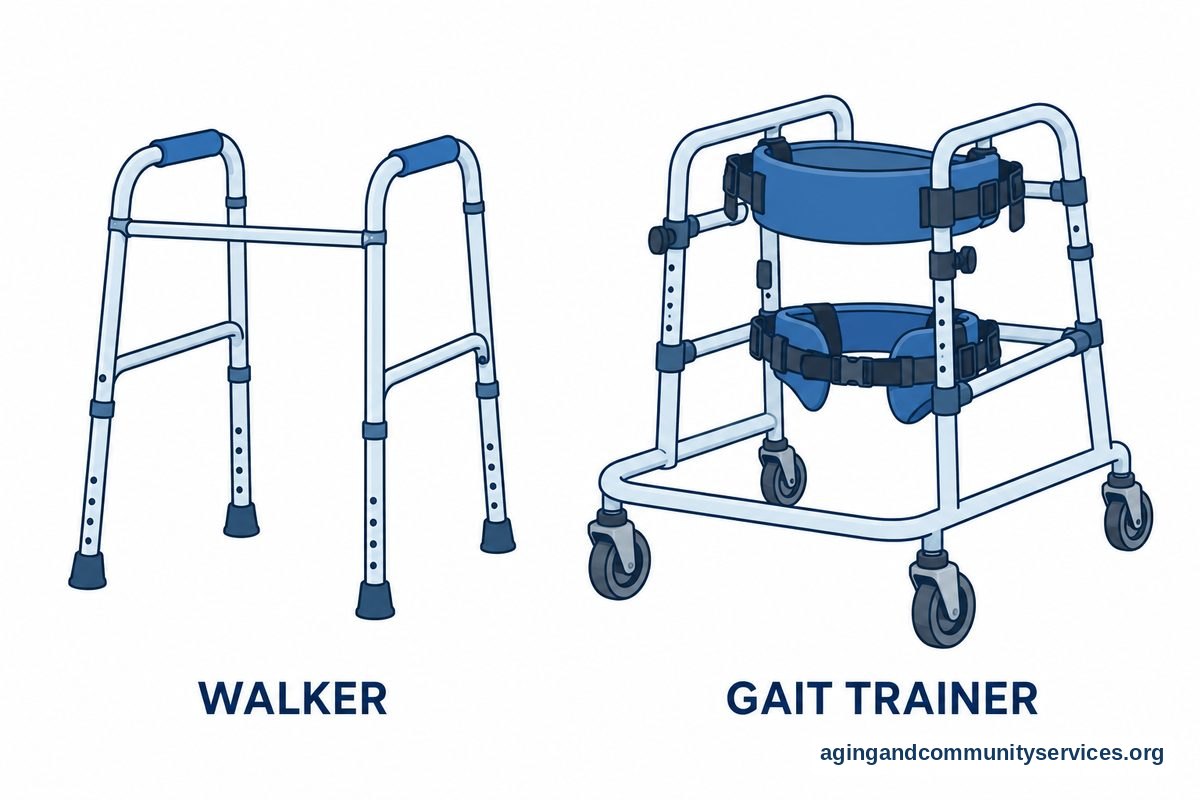
Understanding the Standard Walker
A standard walker is a lightweight metal frame designed to provide a steady base of support while walking. It features handgrips on either side and rests on four contact points. Some models have four rubber tips, while two-wheeled versions have wheels in the front and glides on the back legs. Users grasp the handles, lift or roll the frame forward a short distance, and step into it.
Walkers are common among seniors recovering from joint replacement surgery, mild illnesses, or brief hospital stays. They provide reliable stability for people who can support their own body weight but feel slightly unsteady on their feet. Learning how to use walker frames correctly helps maintain balance across different household floor surfaces.
To get the most out of this device, a person must have adequate arm strength and reliable grip control. The user must also be able to stay upright without physical trunk support. For those who need more detailed guidance on selecting models, learning how to choose a walker can clarify wheel styles and sizing choices.
Who a Walker Suits
A walker suits individuals who need modest support while walking short or medium distances. It works well for people who can stand on their own but want extra security against losing their balance. It is also an excellent tool during temporary recovery phases when leg strength is improving week by week.
Because walkers are light and simple to maneuver, they work nicely in standard houses and apartments. They fold flat with the press of one or two buttons, making them easy to bring along in a vehicle when running errands or attending appointments.
Limitations of a Walker
A standard walker cannot support a person who frequently loses postural control or experiences sudden leg weakness. If a user cannot grip firmly or leans heavily to one side, a simple walker frame may tip or fail to provide adequate security. It does not offer harnesses, seat slings, or trunk prompts to catch someone who begins to sink downward.
Additionally, using a standard walker without wheels requires lifting the frame with every step, which can cause fatigue. Anyone with significant neurological challenges or severe weakness may find that a standard walker requires more upper-body stamina than they comfortably possess.

Understanding the Gait Trainer
A gait trainer is an advanced mobility device built to help people learn, relearn, or maintain the ability to walk. While it looks somewhat like an oversized wheeled walker, it features a much sturdier frame that completely surrounds the user. It is equipped with dynamic casters and specialized components that support specific areas of the body, such as the chest, pelvis, and legs.
Gait trainers are often used in specialized rehabilitation programs for individuals living with conditions that affect the nervous system, such as stroke, brain injury, cerebral palsy, or spinal cord conditions. These devices allow people to practice stepping movements in an upright position even if they cannot stand without assistance.
Caregivers and therapists can attach padded harnesses, arm troughs, and leg separators to match the person’s unique physical needs. These prompts hold the body securely, reducing the muscular effort required to stay upright so the individual can focus on moving their feet forward safely.
Who a Gait Trainer Suits
A gait trainer suits individuals with significant balance limitations, muscle weakness, or abnormal muscle tone who cannot use a conventional walker. It is designed for those who require substantial physical support to bear weight through their legs. It also benefits people who need help keeping their trunk, hips, or legs aligned while walking.
For many individuals, using a gait trainer provides a valuable opportunity to experience standing upright and moving across a room. Families exploring long-term care tools can consult the Eldercare Locator to connect with local physical therapy resources and community support programs that offer equipment evaluations.
Limitations of a Gait Trainer
Gait trainers are large, heavy, and mechanically complex. Their wide bases can make them difficult to navigate through narrow doorways, small bathrooms, and cluttered hallways. Adjusting the straps, prompts, and pads takes time and often requires the assistance of a trained caregiver or therapist.
These devices are also difficult to transport. Many models do not fold easily, and their weight often requires an accessible van or large vehicle to move between locations. Because of their specialized nature, a physician and physical therapist should always evaluate the user before a gait trainer is selected.

How to Decide Between a Walker and a Gait Trainer
Choosing the right mobility device ensures comfort, encourages independence, and supports safe movement. Consider these common situations to determine which tool matches your needs:
- Choose a walker if the user can stand independently and only needs extra balance and stability while walking.
- Choose a gait trainer if the user cannot support their own body weight and requires a padded harness or pelvic seat to stay upright.
- Choose a walker if the device must fold flat quickly for car rides, medical visits, and everyday community outings.
- Choose a gait trainer if the individual has neurological weakness or involuntary muscle movements that require trunk and hip prompts for safe alignment.
- Choose a walker if you need a simple tool that works well in tight household spaces like hallways and narrow doorways.
- Choose a gait trainer if the primary goal is intensive walking rehabilitation under the guidance of a physical therapist.
- Choose a walker if looking through options for walkers for seniors shows designs that match the user’s current physical stamina and arm strength.
During transitions between sitting and standing, safety remains the top priority. Families frequently learn how to use gait belt techniques alongside their mobility devices to give caregivers a secure hold during transfers. Following general recommendations from the National Institute on Aging: Falls and Falls Prevention can lower the risk of balance accidents around the home.

Frequently Asked Questions
Can someone transition from a gait trainer to a walker?
Yes, many people do make this transition over time. A gait trainer is often introduced early in physical therapy when a person needs maximum support to practice stepping. As leg strength, trunk stability, and balance improve, therapists often step down the level of assistance. When the individual can support their own weight securely, they may graduate to an appropriate wheeled or standard walker.
Does a gait trainer require professional supervision?
In most cases, yes, especially when first setting up the equipment. Physical therapists carefully measure the individual and adjust each chest prompt, harness, and arm support to prevent strain. Once the correct settings are established, family members can often be trained to assist with home practice sessions. Always follow therapist instructions regarding strap tension and session lengths.
Can a standard walker be modified to act like a gait trainer?
No, standard walkers should not be modified with homemade harnesses or straps. Walkers are engineered for light balance assistance and cannot support full body weight from a suspended harness. Attempting to add heavy support prompts to a standard walker can cause the frame to tip over. If someone requires trunk support or a seat harness, they should use a dedicated gait trainer designed for that purpose.
How do I know which device fits best inside my home?
Measure your narrowest doorways, room entryways, and hallways before bringing any mobility device home. Standard walkers typically measure between twenty-two and twenty-six inches wide, allowing them to fit through most standard residential doorways. Gait trainers are often wider and longer, meaning they may require larger open areas or wide doorways to turn smoothly. Reviewing guidance on home setups from the National Institute on Aging: Aging in Place can help you organize living spaces for easier mobility.
What is the difference between a rollator and a gait trainer?
A rollator is a four-wheeled walker with hand brakes and a built-in bench seat for resting. Like a standard walker, a rollator requires the user to stand on their own and steer with both hands. It does not support body weight while moving. A gait trainer, by contrast, holds the user upright with specialized body prompts and harnesses, allowing the person to step forward even if their legs cannot hold them up completely.