

Fall prevention activities are simple routines, home checks, and group ideas that help make daily life steadier and safer. They can include balance practice, strength exercises, better lighting, safer shoes, and a review of common trip hazards.
The goal is not to remove every risk. It is to build habits that support confidence, comfort, and independence. If someone has fallen, feels dizzy, or worries about balance, it is wise to talk with a doctor, physical therapist, or occupational therapist before starting new activities.

Start With Everyday Fall Prevention Activities
The most useful activities are often the ones that fit into a normal day. A short routine done often is easier to keep than a long plan that feels like a chore. Family members can help by joining in, offering reminders, or making the home easier to move through.
The National Institute on Aging says regular physical activity, vision checks, medication reviews, and home safety steps can lower the risk of falls. These steps work best when they are practical and matched to the person.
- Morning check: Put on supportive shoes, turn on lights, and make sure glasses or hearing aids are in place if used.
- Clear walking paths: Move shoes, cords, bags, and pet items away from hallways and stairs.
- Slow position changes: Sit for a moment before standing, especially after sleeping or resting.
- Use sturdy support: Hold a rail, counter, or approved mobility aid when needed.
- Keep needed items close: Store daily items between waist and shoulder height when possible.
These are simple fall prevention examples that do not need special equipment. They are also good reminders for caregivers who want to help without taking over.
Exercises That Support Balance and Strength
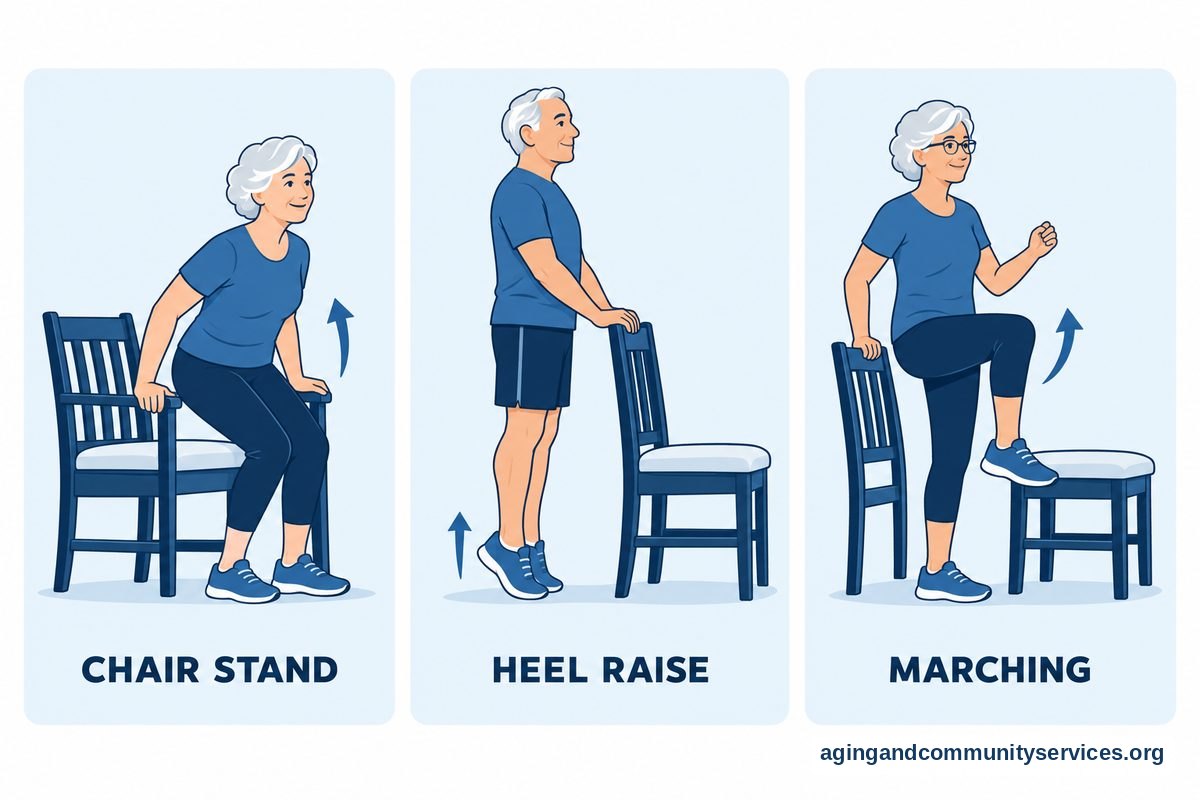
Exercise can be an important part of a fall risk reduction plan. The right movements can support leg strength, balance, posture, and confidence with daily tasks. A doctor or physical therapist can help choose exercises that fit health needs, pain levels, and mobility.
For a more focused routine, a guide to fall prevention exercises can give families ideas to discuss with a professional. Start slowly, use a stable chair or counter for support, and stop if there is pain, chest discomfort, new dizziness, or shortness of breath.
| Activity | How It Helps Daily Life | Safety Tip |
|---|---|---|
| Sit to stand | Supports getting up from a chair or toilet | Use a sturdy chair that does not roll |
| Heel raises | Supports ankle and calf strength | Hold a counter or chair back |
| Side steps | Supports side movement in kitchens and bathrooms | Keep steps small and controlled |
| Marching in place | Supports leg lifting for curbs and steps | Stand near a stable surface |
| Single leg balance | Supports steadiness while dressing or turning | Try only with support nearby |
A few minutes at a time can be enough to begin. Many people do better with a set time, such as after breakfast or before an afternoon walk. If balance feels uncertain, seated exercises or supervised sessions may be a better starting point.
Home Activities That Reduce Trip Hazards
A home safety walk-through is one of the most practical fall prevention activities. It can be done room by room in a calm way. The aim is to notice small things that may get in the way of safe movement.
A printable home safety checklist can help families review the same areas each month. Try to include the person who lives in the home so changes feel respectful and useful.
- Entryways: Add bright lighting, keep mats flat, and make sure steps are easy to see.
- Living areas: Remove loose cords, low clutter, and small rugs that slide.
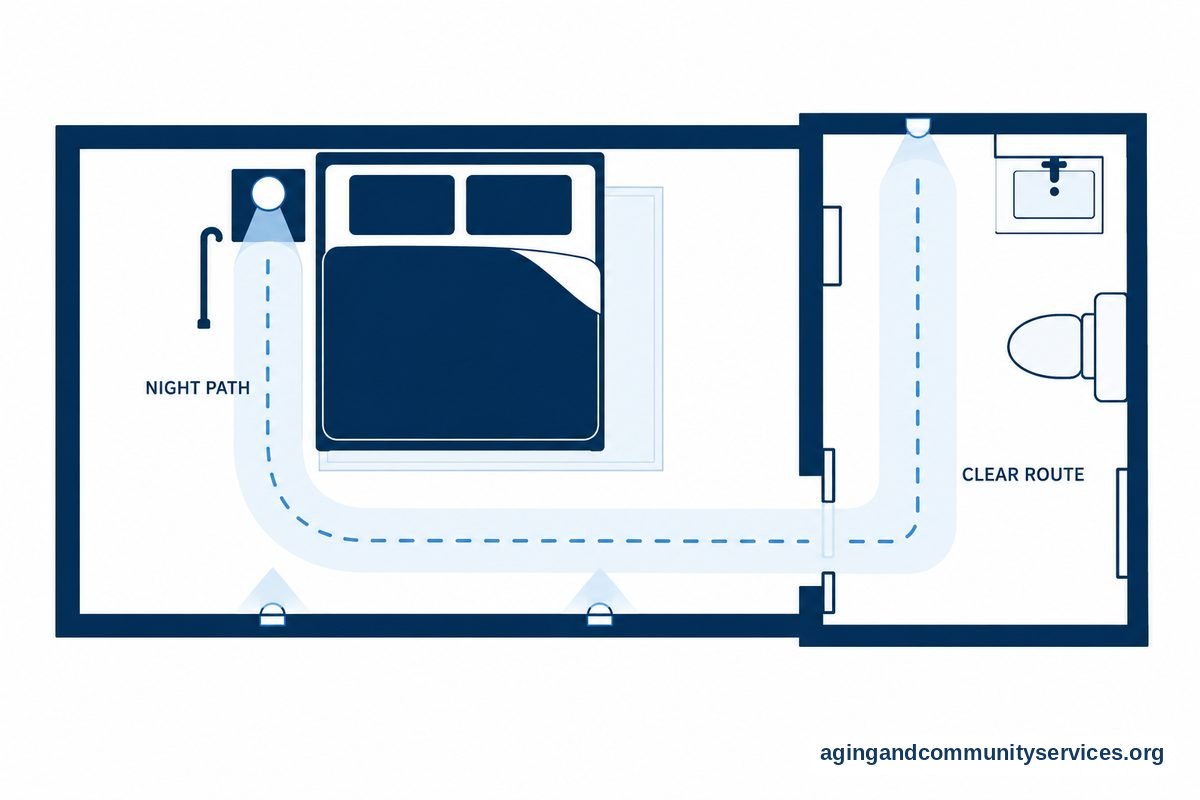
- Bedroom: Keep a lamp, phone, glasses, and walking aid within reach of the bed.
- Bathroom: Use non-slip surfaces and ask an occupational therapist about grab bars if needed.
- Kitchen: Move heavy or often-used items to easy shelves to reduce reaching and climbing.
Lighting matters in every room. Night lights in hallways and bathrooms can make evening trips easier. Stairs should have working lights at the top and bottom, with handrails that feel secure.
Pets can also create trip hazards. Food bowls, toys, and leashes should have a set place. If a pet moves quickly underfoot, a bell on the collar may help the person know where the pet is.

Community and Fall Prevention Month Activities
Fall Prevention Month activities can be a helpful way to bring safety topics into daily conversation. They can happen at senior centers, libraries, faith groups, apartment communities, or family gatherings. The best activities feel useful, friendly, and not embarrassing.
Examples include a balance class, home safety talk, shoe check, vision reminder table, or medication question card to bring to a doctor or pharmacist. The National Council on Aging offers fall prevention information that can support community planning.
Group activities can also be social. A walking group, chair movement class, or gentle game day can make safer movement feel normal. If games are a good fit, ideas for fall prevention games can be adapted for families, activity directors, or small groups.
- Home safety bingo: Players mark squares such as clear hallway, working night light, or sturdy shoes.
- Balance station: A trained leader shows safe movements near a chair or wall.
- Shoe review: People learn what to look for in soles, fit, and support.
- Medication question cards: Participants write down questions to ask a doctor or pharmacist.
- Resource table: Share local classes, transportation help, and home safety services.
Local support may also be available through area agencies, community centers, or health systems. The Eldercare Locator can help people find aging services in their area.
Practical Fall Prevention Examples for Daily Routines
Good fall prevention examples are easy to picture. They connect safety steps to real moments, such as getting out of bed, taking a shower, cooking, or going outside. Small changes often feel more doable than a long list of rules.
Here are examples families can use at home:
- Getting out of bed: Sit on the edge of the bed, place both feet flat, then stand slowly with support nearby.
- Using the bathroom at night: Keep the path lit, remove rugs that slide, and keep the walking aid close.
- Doing laundry: Use smaller loads and avoid carrying baskets that block the view of the floor.
- Cooking: Keep often-used pans and dishes within easy reach, not high overhead.
- Going outside: Check for wet leaves, uneven pavement, loose gravel, or poor lighting before walking.
- Answering the door: Take time. Do not rush from another room or across a dark hallway.
Many falls happen during ordinary tasks, so ordinary routines are a good place to start. A short list posted near the door, bedroom, or fridge can be more helpful than a long packet in a drawer.
Families may also want to review simple fall prevention tips for more everyday ideas. Pick only a few changes at a time so the home still feels comfortable and familiar.
How Family Members Can Help Respectfully
Support works best when it protects choice and dignity. Ask what feels hard, what feels unsafe, and what the person wants to keep doing. Then look for changes that make those activities easier.
It helps to use calm, specific language. Instead of saying, You are going to fall, try, This rug slides when I step on it. Would it help if we moved it? This keeps the focus on the environment, not blame.
Family members can help by joining a walk, arranging a professional home safety visit, or driving to a balance class. Some communities offer structured fall prevention programs that include education, movement, and practical planning.
It is also useful to keep a simple note of concerns. Write down dizziness, recent trips, changes in walking, new medicines, vision changes, or foot pain. Bring these notes to a doctor, physical therapist, occupational therapist, pharmacist, eye doctor, or foot care professional as appropriate.

What You Can Do Next
Start with one room and one routine. Choose a place where trips or slips feel most likely, such as the bathroom, bedroom, stairs, or front entry. Make one or two changes, then see how they feel for daily use.
- Walk through the home: Look for clutter, loose rugs, poor lighting, cords, and unstable furniture.
- Choose a simple movement habit: Try a few safe balance or strength exercises after getting guidance when needed.
- Review shoes and walking aids: Check fit, soles, and whether canes or walkers are the right height.
- Plan for night trips: Add lighting, clear paths, and keep needed items close to the bed.
- Ask about medicines: Bring questions about dizziness or sleepiness to a doctor or pharmacist.
- Use local help: Ask about community classes, home safety checks, transportation, or caregiver support.
If there has been a recent fall, a near fall, or a change in balance, do not rely on home changes alone. A health professional can help look for causes and suggest safer next steps.
Frequently Asked Questions
What are fall prevention activities?
Fall prevention activities are everyday actions that support safer movement. They may include balance exercises, strength practice, better lighting, removing trip hazards, reviewing medicines with a professional, and using supportive shoes.
What are good fall prevention month activities?
Good fall prevention month activities include home safety checklists, balance class demonstrations, shoe checks, medication question cards, and talks by physical therapists or occupational therapists. Social activities, such as walking groups or movement games, can also help people practice safe habits together.
What exercises to prevent falls in elderly adults are commonly used?
Common examples include sit to stand, heel raises, side steps, marching in place, and supported balance practice. These should be matched to the person’s health and ability. A doctor or physical therapist can help choose safer options.
What are simple fall prevention examples at home?
Simple examples include clearing hallways, adding night lights, removing loose rugs, using handrails, keeping a phone near the bed, and storing daily items within easy reach. These small steps can make daily routines easier to manage.
How often should fall prevention activities be done?
Home safety habits can be part of daily life. Exercise routines may be done on a schedule that fits the person, but it is best to ask a doctor or physical therapist what is safe and useful for the individual’s needs.
Who can help with fall prevention at home?
A doctor, physical therapist, occupational therapist, pharmacist, eye doctor, or local aging service may help. Family members can also support the process by listening, helping with small home changes, and encouraging steady routines.