

Knowing how to choose a lift chair comes down to matching your physical size, your room layout, and the motor positions you need for daily comfort. A power lift recliner gently tilts forward to help you stand up and lowers you safely back down into a seated position. Taking time to check dimensions and features ensures you find a secure, supportive seat for your living room.

Understanding Lift Chair Recline Positions
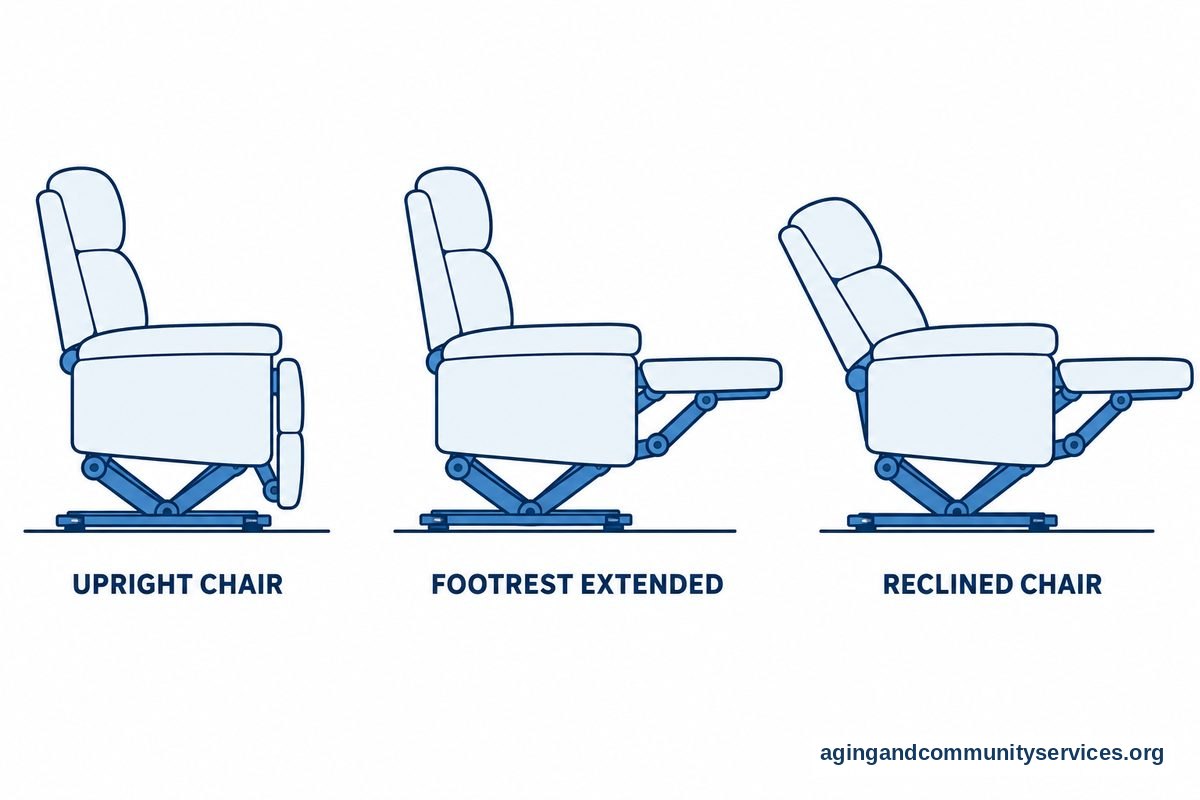
Power lift recliners are categorized by their motor systems and how far back they recline. The right type depends on what activities you plan to do while sitting.
- Two-position chairs: These chairs feature a single motor where the backrest and footrest move together. They offer an upright seated angle and a slight tilt back to roughly forty-five degrees, which works well for reading, visiting, and watching television.
- Three-position chairs: Also powered by a single motor, these models recline further back into a deeper resting position. While they do not lie completely flat, they provide a comfortable angle for an afternoon nap.
- Infinite-position chairs: These models use dual motors, allowing the backrest and footrest to operate independently of one another. You can keep your back upright while elevating your legs, or lay completely flat for sleeping. Many also offer a position where the feet rest slightly higher than the heart.
- Zero-gravity chairs: These advanced dual-motor chairs adjust your body to reduce pressure points along the spine. They evenly distribute body weight, which can help promote relaxed breathing and muscle relief.
Thinking about whether you will use the seat mostly for upright daytime activities or for overnight resting can help narrow down your options quickly.
Finding the Right Size and Weight Capacity
A lift recliner must fit your physical build properly to give you safe, steady support. If a chair is too deep, your lower back may lack support; if it is too high, your feet will dangle instead of resting flat on the floor.
Before you shop, take a few simple measurements using a standard tape measure:
- Seat width: Measure your hips across while seated, then add two to three inches so you have room to adjust comfortably without feeling squeezed.
- Seat depth: Measure from the back of your hips to the inside crease of your knee. When sitting fully back, you want about an inch or two of space between the edge of the cushion and your calves.
- Seat-to-floor height: Measure from the bottom of your heel to the bend of your knee. Your feet should rest flat on the floor when the chair is fully lowered.
- Backrest height: Measure from your seat cushion up to the top of your head to make sure the headrest supports your neck.
Weight limits are equally important. Standard models usually support between three hundred and three hundred seventy-five pounds. If you need extra room and higher support ratings, look into bariatric lift chairs built with reinforced steel frames and wider seating areas.
Selecting Upholstery and Cushion Materials
The fabric on your chair affects how easy it is to clean, how warm it feels, and how long it lasts. Because you may spend several hours a day in this seat, pick a material that suits your daily habits.
Soft fabrics, like woven chenille or plush microfiber, offer a cozy feel and come in many colors to match home decor. Microfiber is tightly woven, making it fairly resistant to everyday wear and simple to spot clean with a damp cloth.
Faux leather and vinyl provide a classic appearance and wipe clean quickly with mild soap and water. These non-porous surfaces work well if you worry about spilled drinks or occasional incontinence. However, vinyl can feel warm during summer months, so breathable polyurethane blends are often a good middle ground.
Cushion density matters as well. High-resilience foam holds its shape over years of use and provides firm support that makes shifting positions easier. Pocketed coil seat systems combine foam with small springs, offering durable support similar to a quality mattress.

Measuring Your Room and Planning Placement
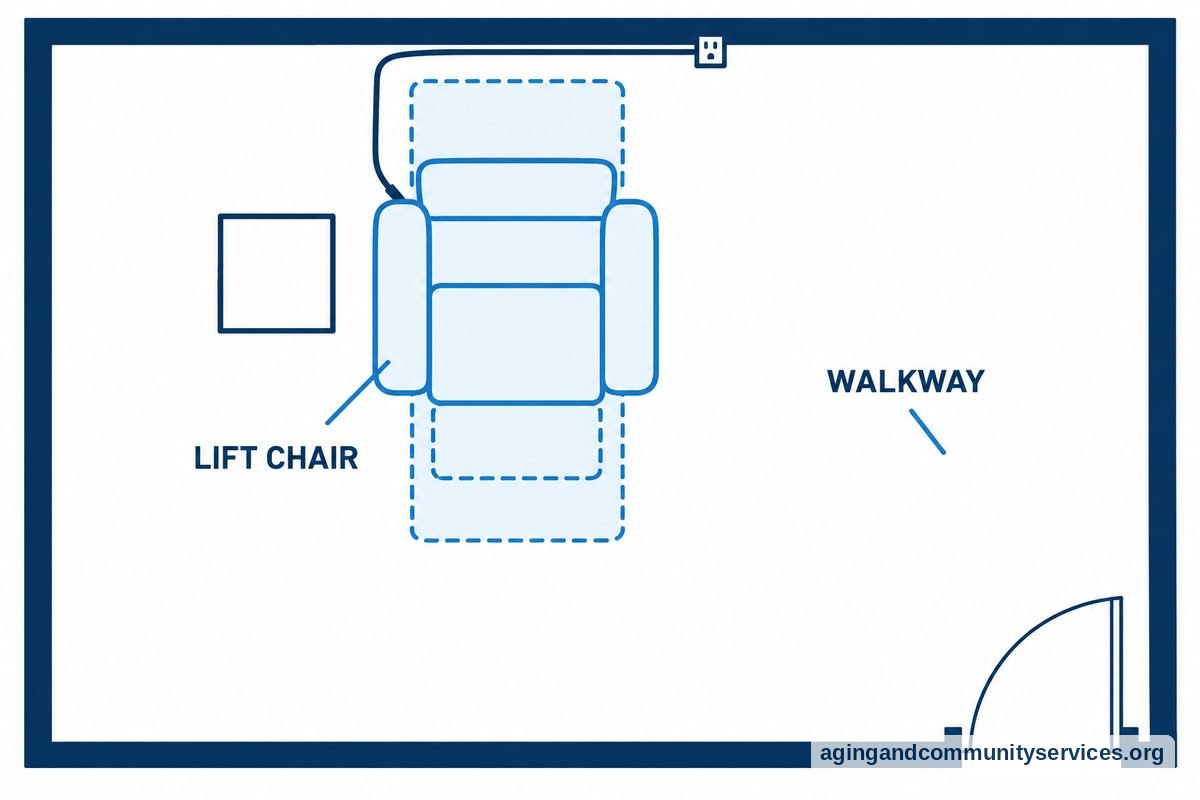
Lift chairs require more floor clearance than standard armchairs. They need space behind the backrest to recline, space in front for the footrest to extend, and vertical clearance when the seat rises up to help you stand.
Check the distance from your wall to the back of the chair before setting it up. A standard model may require eighteen to twenty-four inches of wall clearance to recline fully. If your room is cozy or narrow, look for a wall-hugger design, which slides forward on its base as it leans back, needing only four to six inches of space behind it.
Keep power sources in mind during your planning. Lift chairs plug into standard household wall outlets. Avoid running cords across open walkways where they might create a tripping hazard. For helpful home safety tips, review the guide on falls and falls prevention from the National Institute on Aging.
Helpful Features for Safety and Convenience
Modern power lift recliners offer several convenience features that can improve your daily comfort:
- Battery backup systems: Most models include a backup battery compartment in the power transformer. In the event of a power outage, standard nine-volt batteries supply enough emergency power to bring the chair to an upright position so you can stand up safely.
- Hand control design: Look for a hand pendant with large, easy-to-read buttons and backlighting for nighttime use. Simple two-button remotes operate single-motor chairs, while multi-motor options have separate controls for each section.
- Storage pockets: Deep side pockets keep remotes, magazines, eyeglasses, and tissues within arm reach, reducing the need to lean over the side of the chair.
- Heat and massage settings: Gentle warmth in the lower lumbar area can soothe stiff muscles after a long day. These features are usually controlled right from the hand wand.
Reviewing trusted guides on popular lift chairs for elderly family members can help you compare these extra features across different brands.

Next Steps for Choosing Your Lift Chair
To move forward with choosing the right chair for your home, consider taking these practical steps:
- Take your measurements: Write down your seated height, hip width, and knee-to-heel depth on a notepad. Also measure the floor space in your living area where the furniture will go.
- Talk with a healthcare professional: If you experience joint stiffness, swelling in your legs, or balance concerns, ask a physical therapist or occupational therapist for their advice on motor styles and seat firmness.
- Explore financial options: Standard furniture is paid out of pocket, but Medicare sometimes assists with the motorized lifting mechanism if your doctor signs a certificate of medical necessity. You can read more about does medicare cover lift chair recliners to learn what paperwork may be needed.
- Contact local support groups: For questions about local mobility resources and home modification support, connect with your local Area Agency on Aging through the Eldercare Locator.
- Review safe operation: Once your chair arrives, read the owner manual and learn how to use lift chair controls smoothly before operating the lift feature on your own.
Frequently Asked Questions
How to choose a lift chair for elderly parents who have limited space?
For smaller rooms, look specifically for a wall-hugger or wall-glide lift chair. These models slide forward on their track as the backrest reclines, requiring as little as four inches of space between the chair and the wall. Also check the overall exterior width of the chair to ensure it fits through your home doorways during delivery.
What is the difference between a two-position and three-position lift chair?
A two-position chair reclines to about forty-five degrees, making it ideal for reading or watching television in an upright posture. A three-position chair reclines further back, offering a deeper angle suitable for napping. Both styles operate using a single motor where the backrest and footrest move together.
Can a lift chair be used for sleeping every night?
An infinite-position or zero-gravity lift chair can work well for sleeping because it can lay completely flat or elevate your feet above your hips. If you plan to sleep in your chair regularly, choose breathable fabric and high-density foam cushions that offer lasting support throughout the night.
How do I know what seat size I need?
Measure your body while sitting in a firm, comfortable chair. Your feet should rest flat on the floor, your back should touch the lumbar support comfortably, and there should be one to two inches of space between the front edge of the seat cushion and the back of your knees. Compare those numbers with the manufacturer seat depth, width, and floor-to-seat height specifications.
What happens if the power goes out while I am in the chair?
Most reputable manufacturers include an emergency battery backup system inside the power supply box. By keeping fresh nine-volt batteries installed, the chair retains enough reserve power to return you to a seated or standing position if your household electricity goes out.