

Learning how to use lift chair controls correctly makes sitting down and standing up smooth and gentle. A power lift chair tilts forward to meet you while standing, then lowers you down into a relaxing seated position. When you want to stand again, the electric motor lifts you back onto your feet with the simple push of a button.
These chairs offer wonderful support for older adults who want to stay independent in their own living spaces. Understanding the basic mechanics helps protect your balance, knees, and back every single day. Taking a few moments to practice will help you feel steady and secure every time you rest.

How to Use a Lift Chair Step by Step
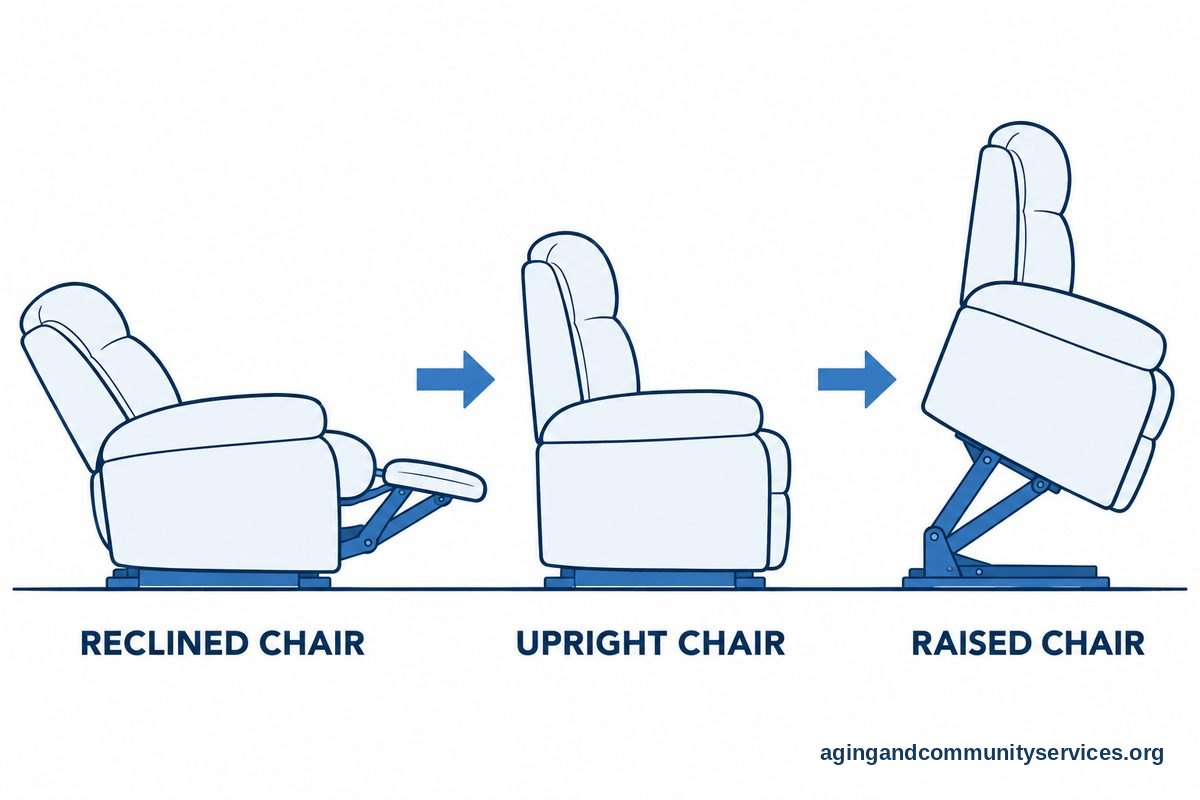
- Raise the seat before sitting down. Press the up button on the hand control until the seat rises to a height where your hips can rest against the cushion while your feet stay flat on the floor.
- Back up until your legs touch the cushion. Step backward slowly until the backs of your calves touch the base of the chair, keeping both feet shoulder-width apart for good balance.
- Grip the armrests with both hands. Place your hands firmly on the armrests to steady your body, gently lowering your weight back into the raised seat.
- Lower the chair slowly into a standard seated position. Press and hold the down button on your remote control until the chair base is flat on the floor and the back cushion supports your spine.
- Adjust the footrest and backrest for resting. Continue pressing the down or recline switch to elevate your legs and lean back into a comfortable resting posture, similar to how to use a recliner safely.
- Return to the upright position before standing. When you are ready to get up, press the up button to bring the footrest down completely and raise the backrest straight up.
- Let the chair lift you into a standing posture. Keep holding the up button while the seat rises and tilts forward, allowing the motor to support your weight until you are nearly standing with your feet firmly planted.
If you are looking into getting one of these helpful seats for your living room, you can review details on lift chairs for elderly individuals to see how different styles operate. Every model follows these same basic movements to keep you comfortable.
Common Mistakes to Avoid
- Stepping away before the chair stops moving. Always wait until the seat has completely lifted you and your balance is steady before you take your first step forward.
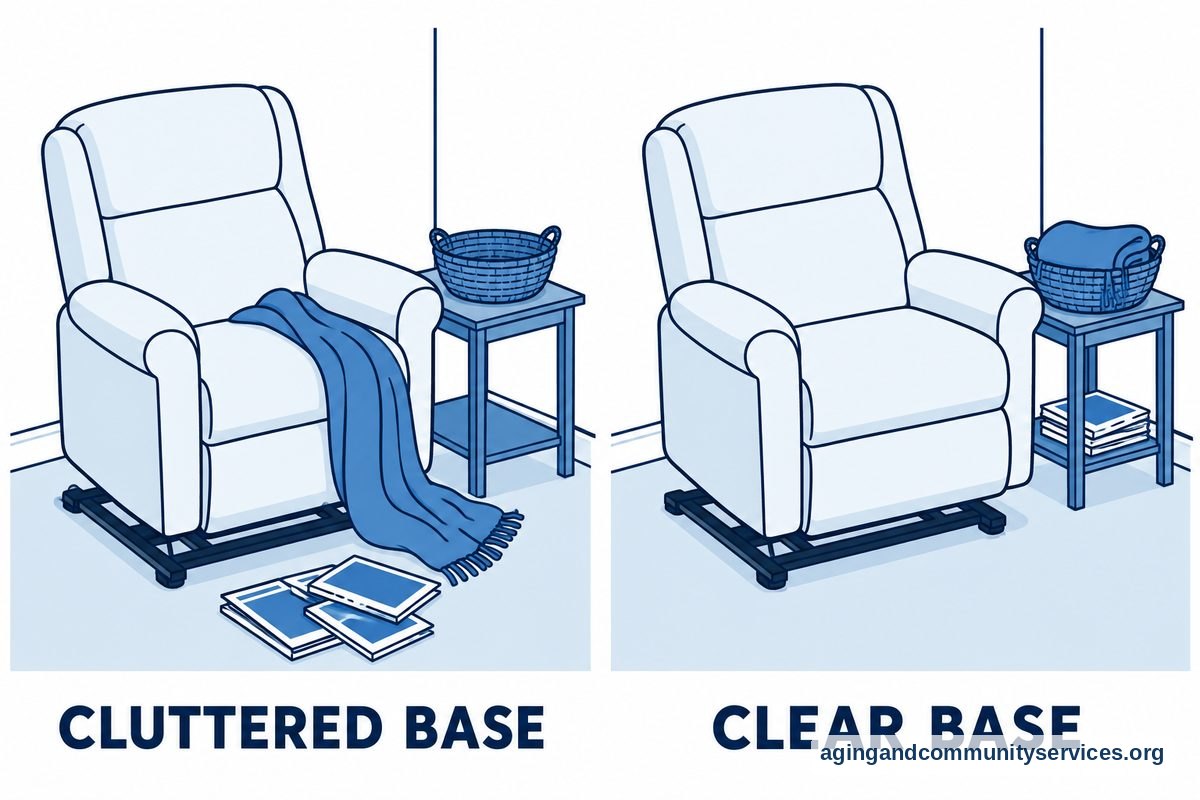
- Leaving clutter around the base of the chair. Keep blankets, magazines, power cords, and footstools clear from the bottom of the frame so the lifting mechanism does not get stuck.
- Attempting to stand with the footrest raised. Never try to climb out of the chair while the leg rest is elevated, as this can cause tipping or loss of balance.
- Letting pets or small children rest near the scissor frame. The metal frame under the seat opens and closes with strong force, so always check the floor area before pressing any buttons.
- Pushing down hard on the footrest to close it. Power lift chairs use electric motors rather than manual springs, so forcing the leg rest down by hand can strip the internal gears.
Creating safe daily habits around furniture helps support successful aging in place for people who want to remain in their homes. Small precautions make a big difference in everyday comfort.
When to Call for Help or Get Professional Advice
Sometimes a power chair requires maintenance, or a person needs more physical support than a standard seat can provide. If the electric motor begins to make grinding noises, moves unevenly, or stops midway through a cycle, unplug the unit and contact the medical equipment supplier or chair manufacturer right away. Have your chair model number and serial number ready when you call so the technician can locate the right parts.
If you or your loved one experiences dizziness, joint pain, or weakness while standing up from the seat, reach out to a doctor or physical therapist. A physical therapist or occupational therapist can evaluate your balance and teach you safe transfer techniques. You can also contact the Eldercare Locator to find local support services and home safety assessments in your community.
For people with severe mobility challenges who cannot support any weight on their legs, a seated recliner might not be enough. In those situations, a medical professional might recommend a specialized transfer device. Reviewing a guide on a lift chair vs hoyer lift can help families understand which piece of equipment matches their physical needs.
How to Use Lift Chair Remote Controls
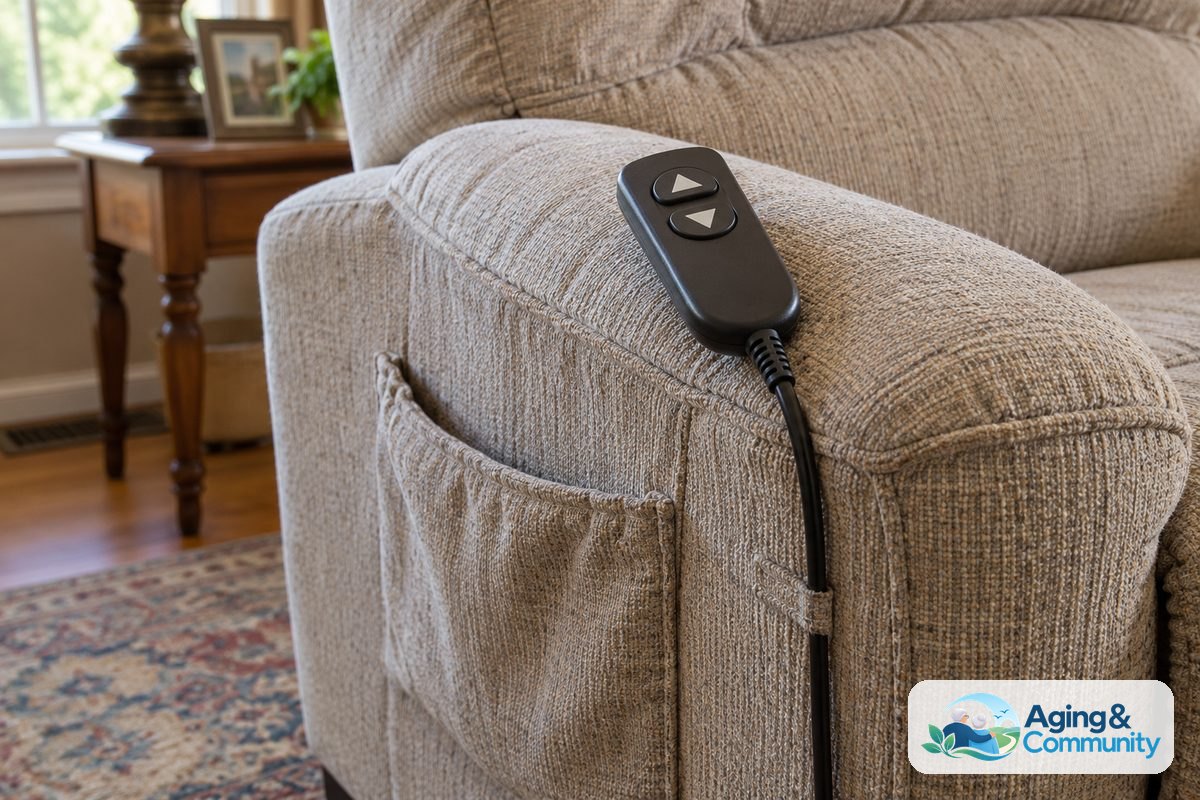
The hand control wand is the brain of your power chair. Most remotes plug directly into the motor under the seat and tuck neatly into a side fabric pocket when not in use. While designs vary between manufacturers, most wands are designed with large, easy-to-read buttons that respond to light pressure.
Simple remotes have two primary buttons: Up and Down. The Up button raises the seat to stand you up and closes the footrest. The Down button reclines the backrest, raises the footrest, and lowers the entire unit to the floor. Holding the button keeps the chair moving, and releasing your finger stops the chair instantly in that exact position.
More advanced models feature four or six buttons that control the backrest and the footrest independently. These dual-motor designs allow you to keep your back straight while elevating your feet, or lean back while keeping your feet on the floor. Take a few minutes to test each switch while seated squarely in the center of the cushion so you feel comfortable with the speed and movement.
How to Use a Lift Chair for Elderly Family Members
Helping a parent or relative learn the controls requires patience and clear communication. Begin by placing the hand pendant on their preferred side, making sure the cord does not wrap around their legs or the armrests. Show them how releasing the switch stops all movement immediately, which provides great reassurance to first-time users.
Encourage them to wear supportive footwear with non-skid soles whenever they use the chair. Smooth socks or slick slippers can slide on hardwood or tile when the seat lifts forward. Having stable footing ensures that their feet grip the floor securely as their hips rise.
If a walker or cane is part of their daily routine, keep that mobility aid within easy arm reach of the chair. They should hold the chair armrests while the seat is rising, and only reach for their walker once they are standing upright and fully balanced. Practicing this routine together several times helps build confidence and independence.
Families often ask about financial assistance when setting up a safe living space. You can read about does medicare cover lift chair recliners to learn what medical documentation a doctor must provide for motor coverage.
Frequently Asked Questions
How long can you leave a lift chair plugged in?
You can leave your power chair plugged into a standard wall outlet all the time. The motor only draws electrical power when you press a button on the hand control. Most chairs also feature an internal backup battery compartment that uses standard nine-volt batteries to lower the chair during an electrical power outage.
Can you sleep in a power lift recliner?
Many people find lift chairs very comfortable for afternoon naps or resting with elevated legs. Chairs that recline into a fully flat position provide adequate support for extended rest, though you should check with a doctor if you plan to sleep in a chair every night. Adding a light blanket and supportive neck pillow can make resting even more comfortable.
What should you do if the hand remote stops working?
First, check that the main power cord is securely plugged into both the wall outlet and the transformer box on the floor. Next, inspect the quick-release cable connecting the hand remote to the chair motor under the seat to make sure it has not pulled loose. If the connections are tight but the chair still does not respond, call the equipment retailer for service.
Does using a lift chair weaken your leg muscles?
A lift chair helps you stand up without straining your joints, but it does not replace normal movement. Using the chair as intended allows you to conserve energy so you can walk and stay active throughout the day. You can discuss safe leg-strengthening exercises with a physical therapist to keep your muscles strong while enjoying the chair’s support.
How does proper chair use help support balance?
Using the power lift feature brings your body into an upright, stable standing posture before you take a step. According to resources on falls and falls prevention from the National Institute on Aging, having stable support and clear foot placement can lower the risk of slips and stumbles in the home.
