

Learning how to use a recliner correctly helps you rest comfortably while keeping your body supported. Most models operate with a simple manual lever, a push-back motion, or an electric hand control that adjusts the backrest and footrest. Taking a moment to sit down smoothly and lock the chair into position makes every rest break relaxing and safe.

Steps for Using a Recliner Chair
- Clear the area around the base: Make sure blankets, power cords, side tables, and pets stay clear of the moving metal parts under the seat.
- Back up until your legs touch the cushion: Place both feet flat on the floor, reach back for the armrests, and lower yourself slowly into the center of the seat.
- Scoop your hips fully back: Slide your hips against the backrest so your lower back receives continuous support while you sit upright.
- Engage the footrest smoothly: Pull the side lever outward, lean back gently for a push-back model, or press the up button on a power remote to elevate your legs.
- Adjust the recline angle: Lean your torso back gradually until your head, neck, and shoulders rest naturally without strain.
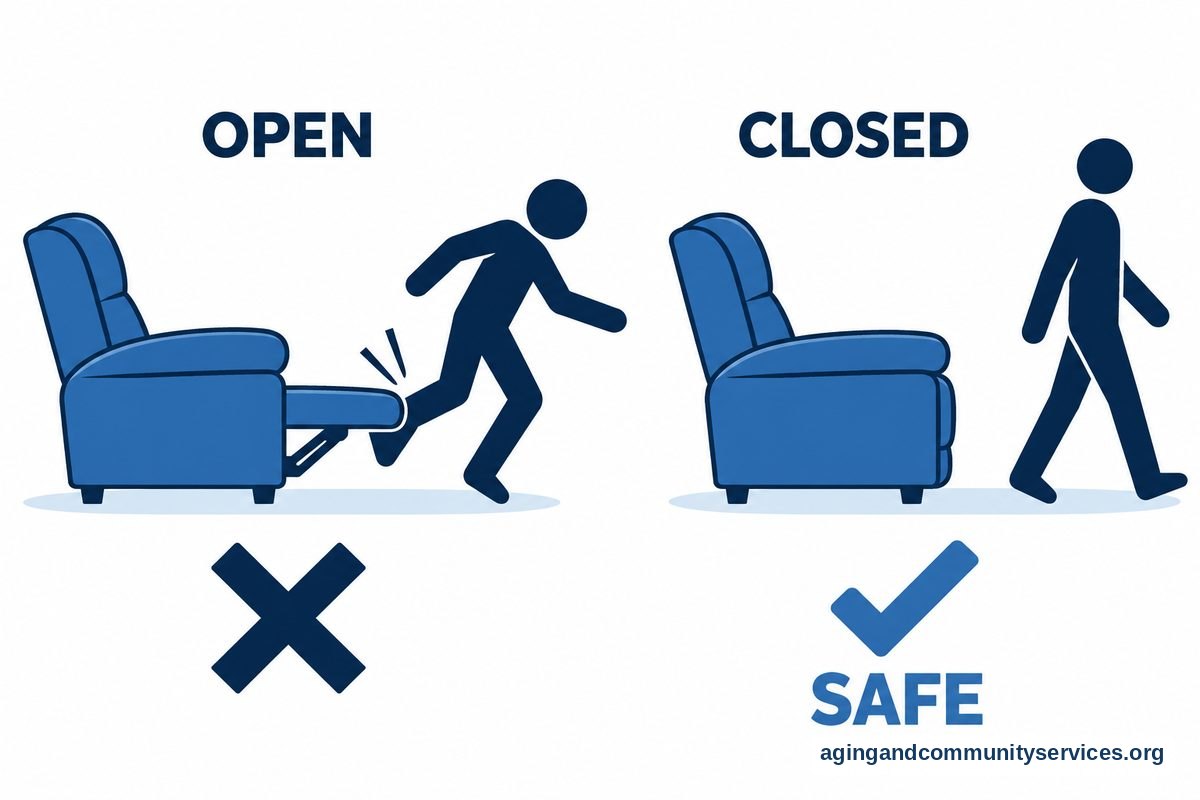
- Return to the upright position before rising: Push the lever back down, pull your torso forward, or press the down button until the footrest clicks shut and your feet touch the carpet.

Common Mistakes to Avoid
- Standing up while the footrest stays open: Trying to climb over an open leg rest can tip the frame forward and lead to a fall. The National Institute on Aging provides tips on falls that emphasize keeping walkways and seating clear.
- Dropping heavily into the seat: Falling back hard onto the cushions stresses the wooden frame, the mechanical springs, and your spine.
- Leaving the power remote out of reach: Placing the hand control on an end table across the room forces you to stretch or twist dangerously while tilted back.
- Sitting off-center on the cushion: Leaning sideways places uneven pressure on the internal scissor hinges and can twist your lower back over time.
- Allowing children or pets near an open base: Mechanical lift frames and folding hinges can pinch small fingers, paws, or loose fabrics during adjustments.
When to Call for Help or Professional Advice
Sometimes a seating setup needs professional attention. If your chair jerks, makes grinding noises, or fails to lock when the footrest opens, stop using the reclining feature. Call the furniture store service team or a local mobility repair technician. Let them know the brand of your chair, whether it uses a manual spring or an electric motor, and describe the exact noise or sticking point you notice.
You should also seek outside advice if you find it difficult to stand up from a deep cushion without joint pain. A physical therapist or occupational therapist can evaluate your balance and body mechanics. They can show you proper ways to rise or suggest specialized equipment to support your independence. For community-based resources and mobility programs, the Eldercare Locator connects older adults with local assistance agencies.
How to Use a Recliner Sofa with Family
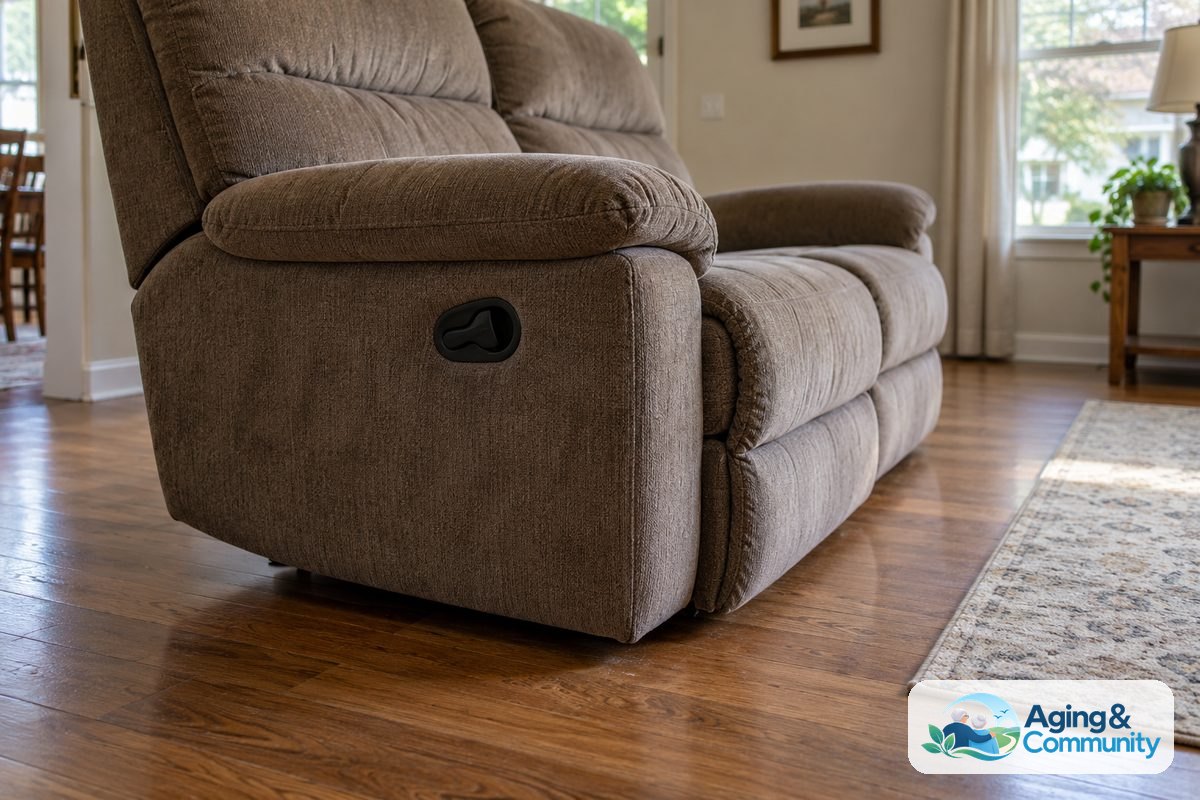
A reclining couch provides wonderful shared comfort, but it requires extra awareness because multiple sections move independently. Before adjusting your section, glance over to confirm that grandchildren, family pets, or stray throw pillows are away from the gaps between seats. Each person should adjust their own side without pulling on neighboring cushions.
When using a manual sofa handle, keep your grip firm until the footrest catches in place. If your couch features a drop-down center console with cup holders, fold it up securely before reclining all the way back. Sharing a sofa works best when everyone brings their footrest down completely before standing up to fetch a drink or answer the door.
How to Use a Recliner Seat in a Home Theater or RV
Many modern living rooms, travel trailers, and home theaters feature specialized reclining seats built into rows or tight nooks. These seats often feature wall-hugger mechanisms designed to slide forward as the back drops, which preserves wall space. Always confirm that your seat has at least four inches of wall clearance so the fabric does not rub against the drywall.
These compact seats frequently feature illuminated toggle switches on the inside arm rather than dangling remotes. Locate these buttons with your fingertips before the room lights dim. If you spend long afternoons watching movies, reading, or traveling, adding pressure relief seat cushions can help distribute your weight evenly and protect sensitive skin across the hips.
Tips for Operating Different Recliner Mechanisms
Manual lever chairs use a spring-loaded latch to release the footrest. When you pull the handle, the footrest springs upward, and your body weight pushes the backrest down. To return upright, lean forward so the back rises, then press your heels down into the middle of the leg rest until the internal latch snaps closed.
Push-back armchairs do not have an outside lever. You simply place your palms flat on the armrests and gently push backward using your shoulders and upper body. Electric power models offer the smoothest ride of all. If you are exploring new furniture choices, reading about how to choose a recliner helps you match the mechanical style to your physical strength.
For people who need extra support while standing, power lift designs gently tilt upward to meet you. These specialized chairs are often featured among popular recliners for seniors who value comfort and safety. If you have severe joint stiffness or muscle weakness, explore whether Medicare covers lift chair recliners to help offset the cost of the motorized lifting mechanism.
Safe Posture and Body Alignment
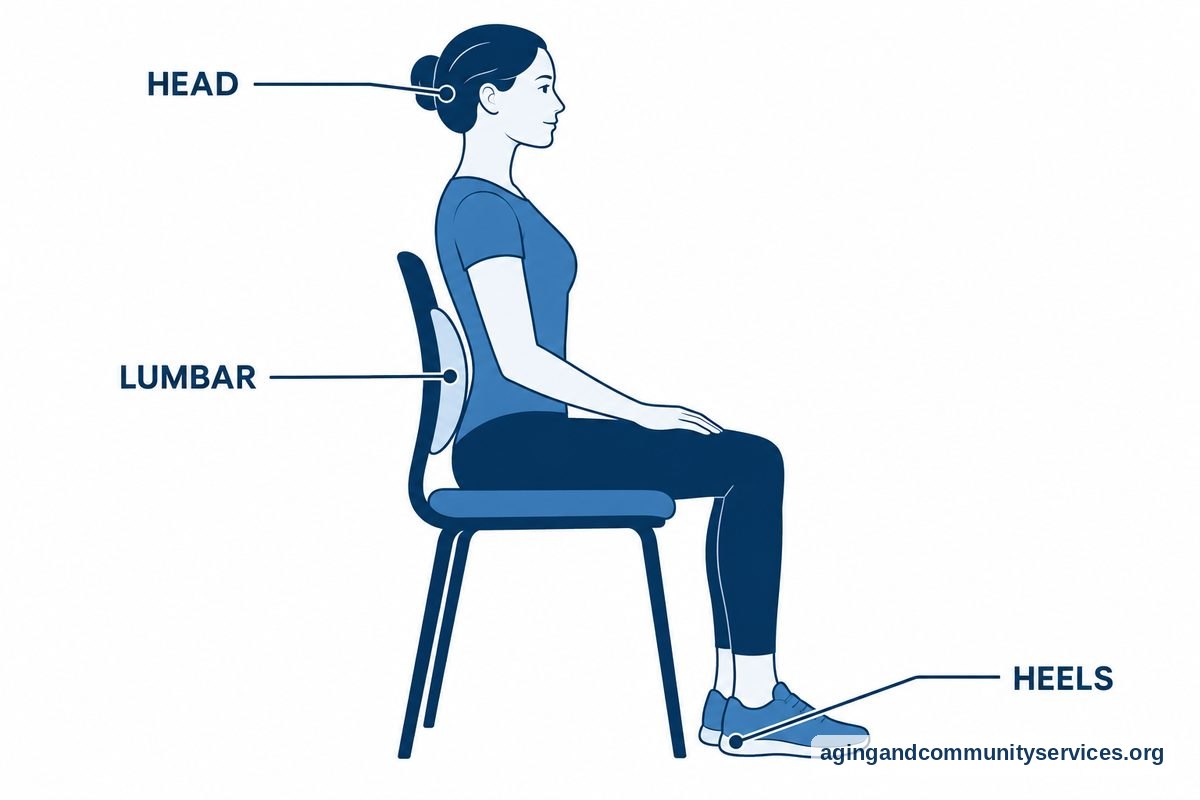
Using an armchair properly means supporting your natural spinal curve. When your chair reclines, your head should remain upright enough to watch television or read without craning your neck. If the back cushion pushes your head too far forward, place a small lumbar pillow behind your lower waist to restore balance.
Your legs should rest evenly along the padded footrest with your heels resting just over the edge. This placement keeps pressure off your Achilles tendons and calves. Modifying home seating is a practical part of aging in place with comfort, ensuring your favorite living space remains supportive for years to come.
Frequently Asked Questions
How to use recliner chair controls if they feel stiff?
If a manual handle feels tight, take your weight off the footrest before pulling the lever. Never yank the handle with sudden force. For electric controls, check that the power cord connects firmly into the wall outlet and inspect the hand wand cable for loose connections or pinches under the base.
How to use a recliner chair without hurting your lower back?
Always slide your rear all the way into the seat crease before you lean back. This keeps your lumbar spine supported by the primary cushion. Use an extra rolled towel or small cushion behind your lower back if the gap between the seat and backrest feels too deep.
How to use a recliner sofa safely with pets in the room?
Always check the floor space beneath the footrest before you close the unit. Cats and small dogs often crawl under open frames because the dark space feels cozy. Lower the footrest slowly and keep a hand free to gently nudge pets away from moving scissor braces.
How to use a recliner seat if you are shorter or taller than average?
A proper fit ensures your knees bend at a natural right angle when the chair stays upright. Shorter users can place a firm wedge cushion behind their back so their feet reach the floor. Taller users should look for extended leg supports to keep their feet from dangling unsupported in midair.