

Learning how to choose grab bars starts with matching the bar to your physical needs, your bathroom layout, and your wall structure. A good bar gives you steady support where wet surfaces make moving around tricky. By looking at size, surface texture, weight limits, and mounting styles, you can pick the right safety rails for your home with confidence.

Think About the User and Daily Routines
The first step in choosing safety rails is to think about who will use them each day. Consider how much hand strength the person has and whether their grip is limited by stiff joints. Someone who leans their full body weight onto a bar needs a different setup than someone who just needs a light touch for balance.
Watch how people move through the bathroom during normal routines. Notice where people reach out to touch walls, sink edges, or towel racks for support. Those natural reach points show you exactly where a sturdy bar will be most helpful. Looking at reliable advice on aging in place can help you spot other areas around the house that might benefit from extra stability.
It can also help to review choices for bathroom grab bars for elderly family members to see how different styles match distinct physical needs.
Look at Diameter and Grip Texture
Grab bars come in different thicknesses, and selecting the right diameter makes a big difference in hand comfort. Most standard residential bars come in either one and a quarter inch or one and a half inch diameters. A smaller diameter is often easier for small hands or stiff fingers to wrap around completely.
Surface finish matters just as much as bar thickness. Smooth, polished metal can become slippery when wet hands touch it with soapy water. You have several finish options to consider:
- Textured or knurled metal: These bars have a raised pattern cut into the metal to give your fingers extra traction.
- Peened finish: This finish has a slightly dimpled texture that improves grip without feeling rough on delicate skin.
- Brushed metal: A brushed surface offers slightly more friction than polished chrome while still being very easy to wipe clean.
- Slip-resistant sleeves: Some metal bars feature integrated rubber or soft-grip inserts along the back or sides.
Make sure there is about one and a half inches of space between the bar and the finished wall. This leaves enough room for hands to wrap around securely without letting an arm slip through and get caught.

Check Weight Ratings and Mounting Types
Every safety rail has a maximum weight limit, and you should always confirm this before buying. Most standard residential bars support at least two hundred and fifty pounds when installed into solid wood framing. Heavy duty options can support up to five hundred pounds or more.
Understanding your household needs will help you review grab bar weight capacity before you make a final purchase. The way the bar attaches to your wall is just as important as the strength of the bar itself. There are two primary mounting types to consider:
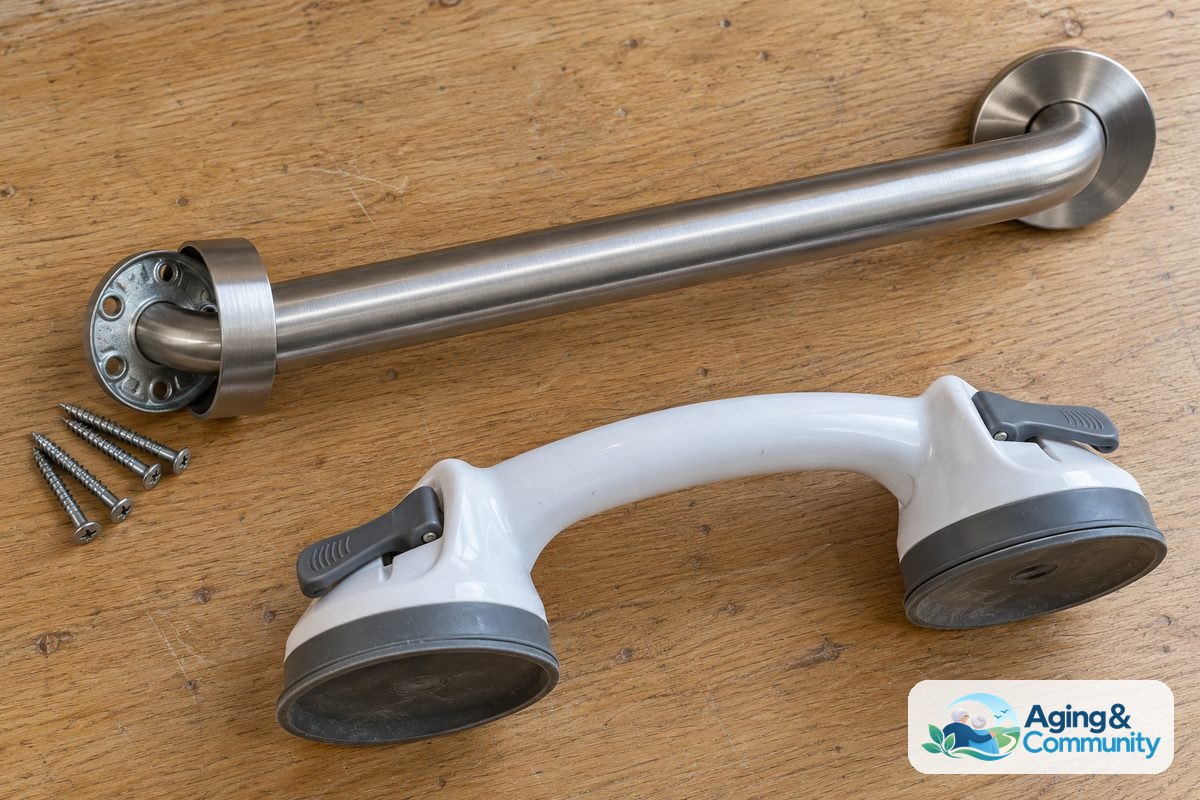
- Wall-mounted bars: These screw directly into wall studs using heavy wood screws. They offer the strongest hold and remain stable through years of daily use.
- Suction bars: These attach to smooth tile with vacuum levers. They do not hold full body weight and can loosen over time, so they are only meant for light balance checks or temporary travel.
For permanent safety in the shower or tub, wall-mounted bars anchored to solid wood or approved masonry hollow-wall anchors are strongly recommended.
Pick the Right Length and Shape
Grab bars range in length from twelve inches up to forty-two inches or longer. The best length depends on the size of your shower or tub wall and how the bar will be used. A short twelve-inch or eighteen-inch bar works well placed vertically near the shower entrance to assist with stepping over the threshold.
Longer bars, such as twenty-four to thirty-six inches, work well placed horizontally or at an angle along the back wall of a tub. Angled or horizontal bars give you support as you walk from one end of the tub to the other, or as you push up from a shower seat.
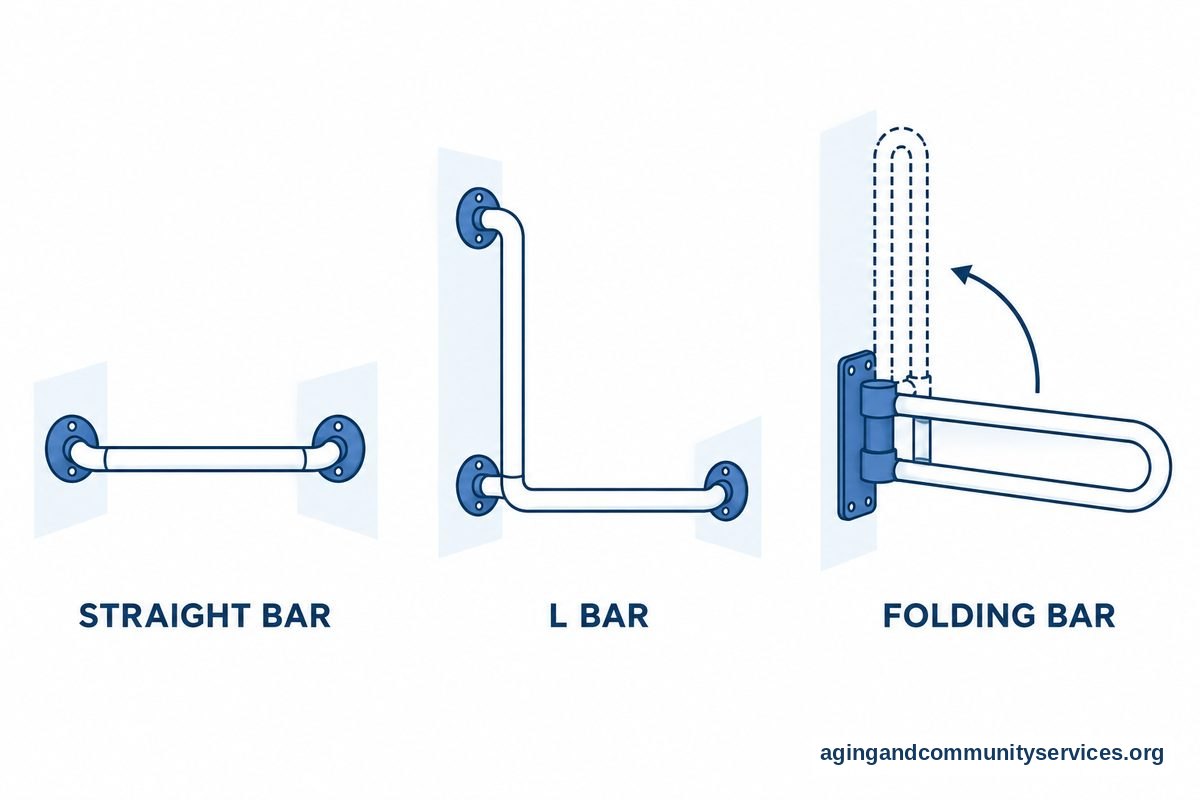
You can also choose between straight bars and specialty shapes:
- Straight bars: Simple rods that mount horizontally, vertically, or diagonally.
- L-shaped bars: These provide both a horizontal push surface and a vertical pull surface in one unit.
- Flip-up bars: These mount next to the toilet and fold up against the wall when not in use, which saves space in smaller bathrooms.
- Two-in-one accessories: Some modern bars double as towel racks or corner soap dishes while still meeting weight standards.
Before purchasing, measure your available wall space carefully to ensure the bar will fit between corners, faucets, and tile edges.
Plan Around Wall Construction and Installation
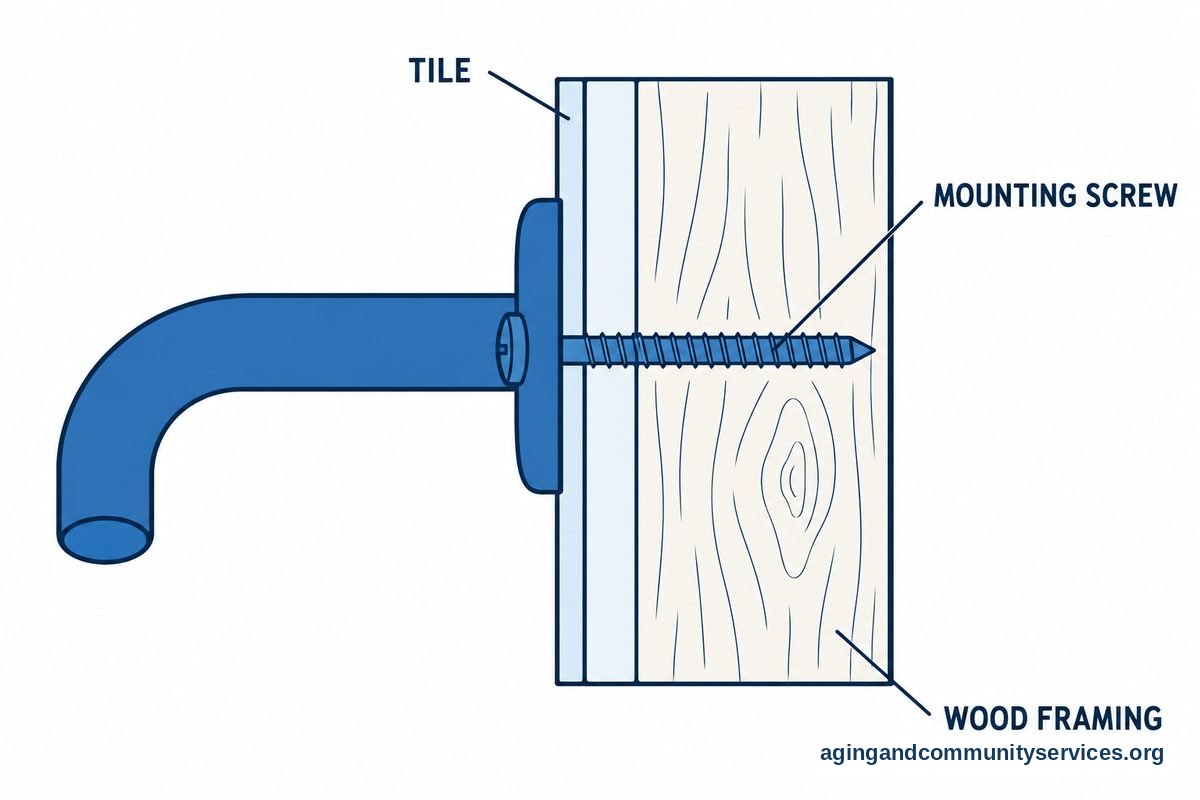
Even the strongest bar will fail if it is not secured into solid structural material. Drywall, fiberglass tub surrounds, and tile backer board cannot support a person leaning on a bar by themselves. You must mount the screws into wooden wall studs or use special hollow-wall anchors designed specifically for grab bars.
Finding wall studs through thick tile or stone can take patience. A stud finder designed for deep scanning can help locate the wooden framing behind the shower enclosure. If studs do not sit in the exact spot you need, an installer can open a small section of wall to add solid wood blocking between the studs.
Taking time to understand proper grab bar placement helps you choose the correct length for your specific framing layout. The National Institute on Aging notes that basic home modifications like adding grab bars can lower the risk of falls inside the home, as outlined in their guidance on falls and falls prevention.
What to Do Next
Choosing and installing grab bars is a manageable project when broken down into clear steps. Here is how you can move forward today:
- Walk through the bathroom: Step into the tub or shower and sit on the toilet. Note the exact heights and spots where you naturally reach for balance.
- Measure your walls: Use a tape measure to check the open space on your main tub wall, shower entrance, and near the toilet.
- Talk with a professional: Consider speaking with an occupational therapist or physical therapist. They can evaluate your specific balance needs and recommend exact placements.
- Check local help: If you need help finding qualified local handymen or home modification programs, contact the Eldercare Locator to explore support services in your community.
- Confirm payment options: Look into your insurance benefits and read about whether does medicare cover grab bars so you know what out of pocket costs to expect.
Frequently Asked Questions
Where should grab bars be placed in a standard shower?
Most bathrooms benefit from at least two bars in the shower area. One vertical bar works best at the entrance to steady you as you step in and out. A second, longer bar should run horizontally or diagonally along the side wall to support you while washing or standing under the water.
What is the difference between a grab bar and a towel bar?
Towel bars are held in place by small set screws anchored into drywall or thin plaster. They are only designed to hold the weight of damp fabric. A true grab bar uses heavy-duty mounting plates anchored into wall framing and can support several hundred pounds of pulling force.
Are suction cup grab bars safe for daily support?
Suction cup bars are not designed to support a person falling or pushing up with full body weight. They can lose their vacuum seal without warning, especially over grout lines or textured tile. Wall-mounted bars anchored into wood studs are the safest choice for regular home use.
What finish is least slippery when wet?
Bars with a knurled or peened texture provide the best grip for wet, soapy hands. Brushed finishes like brushed nickel or satin stainless steel also provide better friction than polished chrome, which can be slick when wet.
How far should a grab bar stick out from the wall?
A grab bar should leave roughly one and a half inches of space between the rail and the wall surface. This provides enough clearance for hands to get a firm grip without leaving enough room for an arm or elbow to slip through accidentally.