

Learning how to use cpap pillow designs properly can help you sleep much more comfortably with your therapy equipment. These specialized pillows feature special cutouts that leave empty space for your mask, tubing, and headgear so your seal stays intact all night. Taking a few simple steps to position your head and neck correctly will ensure you get restful rest without frustrating air leaks.
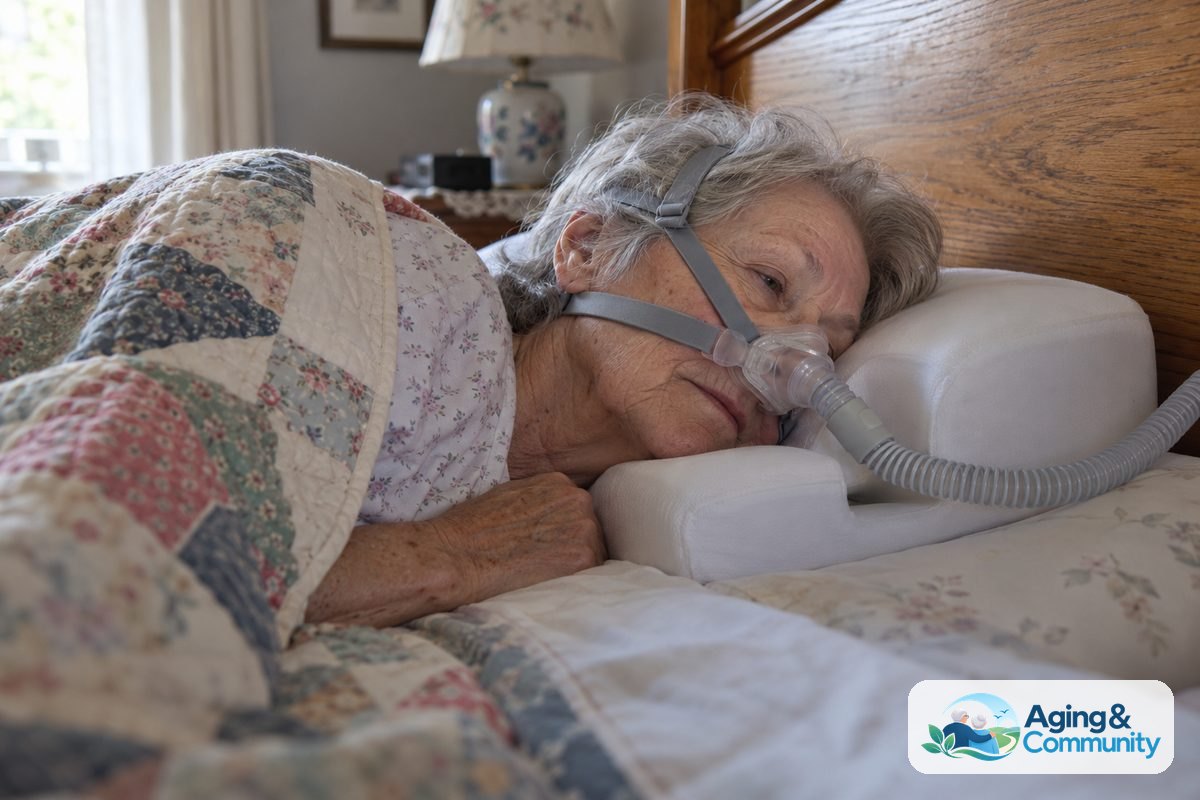
Steps on How to Use a CPAP Pillow
- Check the pillow orientation. Place the pillow flat on your mattress with the contoured neck roll facing down toward your shoulders and the side cutouts pointing toward the edges of the bed.
- Adjust the height or layers. Many pillows include removable foam inserts, so take out or add layers until your neck rests in a straight line with your spine.
- Lie down in your usual sleeping position. Rest your head on the center support area so your neck feels completely supported without tilting too far forward or backward.
- Align your mask with the cutouts. Turn your head toward the side if you sleep on your side, allowing your face mask to hover over the hollow cutout space without touching the foam.
- Route your air hose gently. Direct the flexible hose upward toward your headboard or across the top of the bed to avoid tugging on your gear as you move.
- Test the seal before sleeping. Turn on your airflow to make sure your mask does not press against the cushion or pull away from your face when you settle into place.
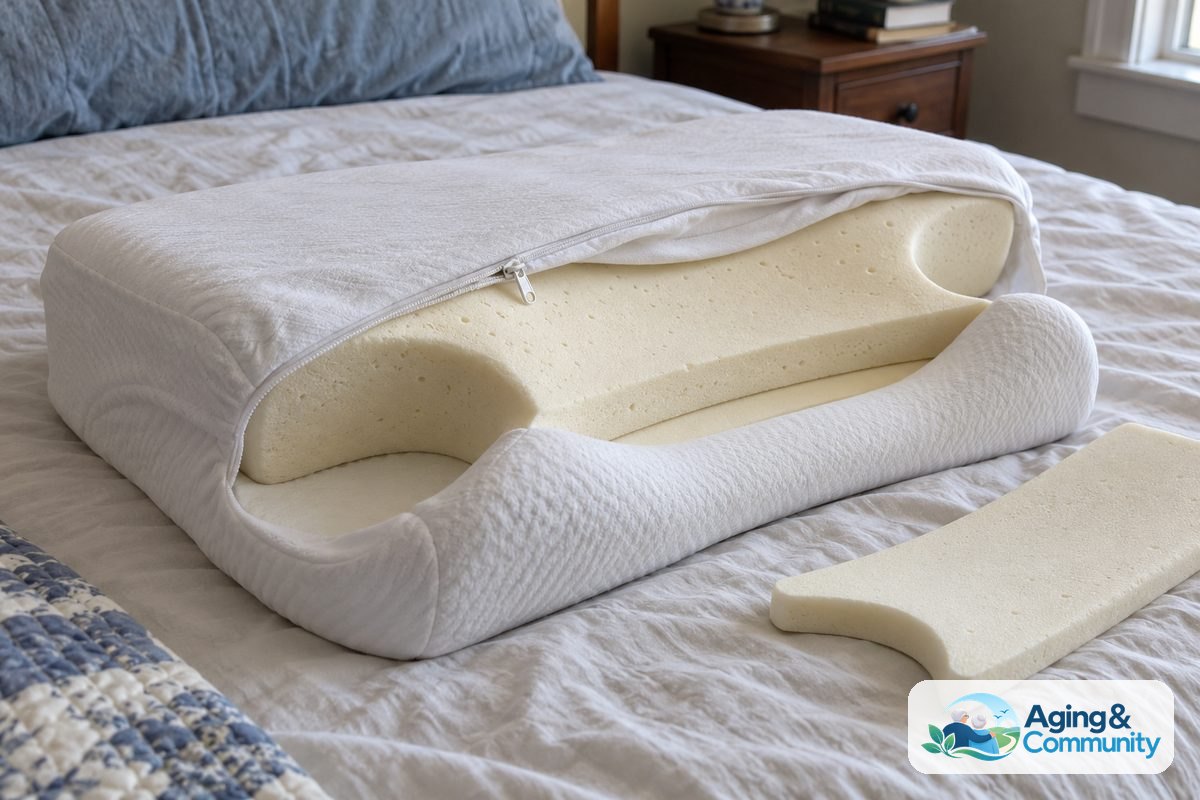
Common Mistakes to Avoid
- Placing the pillow backward: Putting the large neck support at the top of the bed instead of under your neck can cause soreness and poor alignment.
- Sleeping too close to the middle: Staying directly in the center while sleeping on your side prevents your mask from resting over the side cutouts, which pushes the mask out of place.
- Using a pillow that is too thick: Leaving too many foam layers inside the cover can bend your neck forward and lead to morning neck stiffness.
- Pulling mask straps too tight: Over-tightening your headgear to stop leaks instead of letting the pillow cutouts do the work can cause skin irritation and red marks.
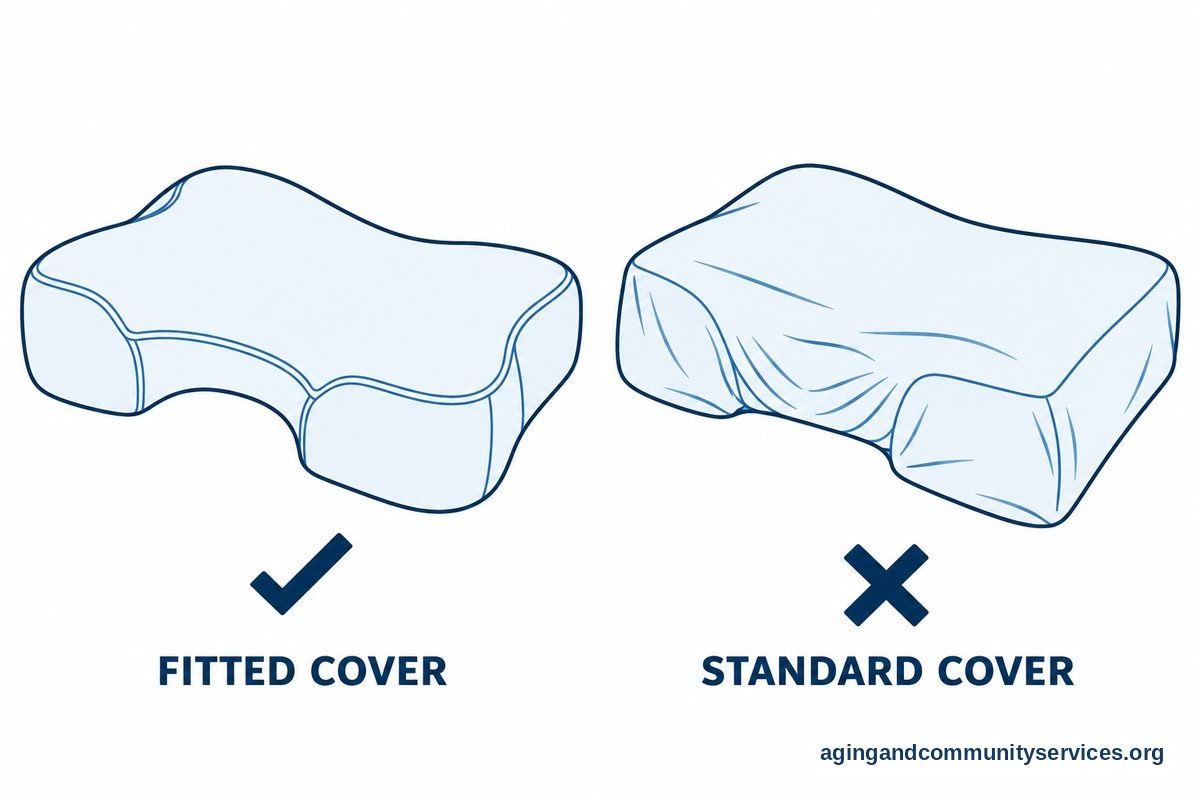
- Using standard pillowcases: Putting a regular rectangular pillowcase over a specialized contour pillow bunches up fabric in the cutouts, defeating the purpose of the shape.
When to Call for Help or Professional Advice
If you adjust your pillow and still wake up with dry eyes, morning headaches, or loud air leaks, reach out to your equipment supplier or sleep specialist. Tell them where the air escapes and whether the mask feels pushed against your skin during sleep. They can check your gear and explain how to use cpap mask adjustments for a better fit.
You should also talk with a doctor or physical therapist if you experience ongoing neck pain, shoulder tension, or back soreness. Bring your pillow dimensions or product name to your appointment so they can evaluate your sleeping posture. If you need local community resources or health support, the Eldercare Locator connects older adults with helpful neighborhood services.
Getting the Right Bed Setup
Using a specialized pillow works best when the rest of your sleep space supports your nightly routine. Make sure your bedside table sits at a height level with your mattress so your machine rests securely without pulling the hose. You can review how to use cpap machine features like tube temperature control to keep condensation from building up near your pillow.
Keeping your nighttime area free from clutter makes moving around safer when you wake up. Reading helpful materials on falls and falls prevention can help you arrange your bedside rugs, nightlights, and cords safely. When your room is set up well, you can turn over comfortably without worrying about knocking over equipment or tripping on dropped hoses.
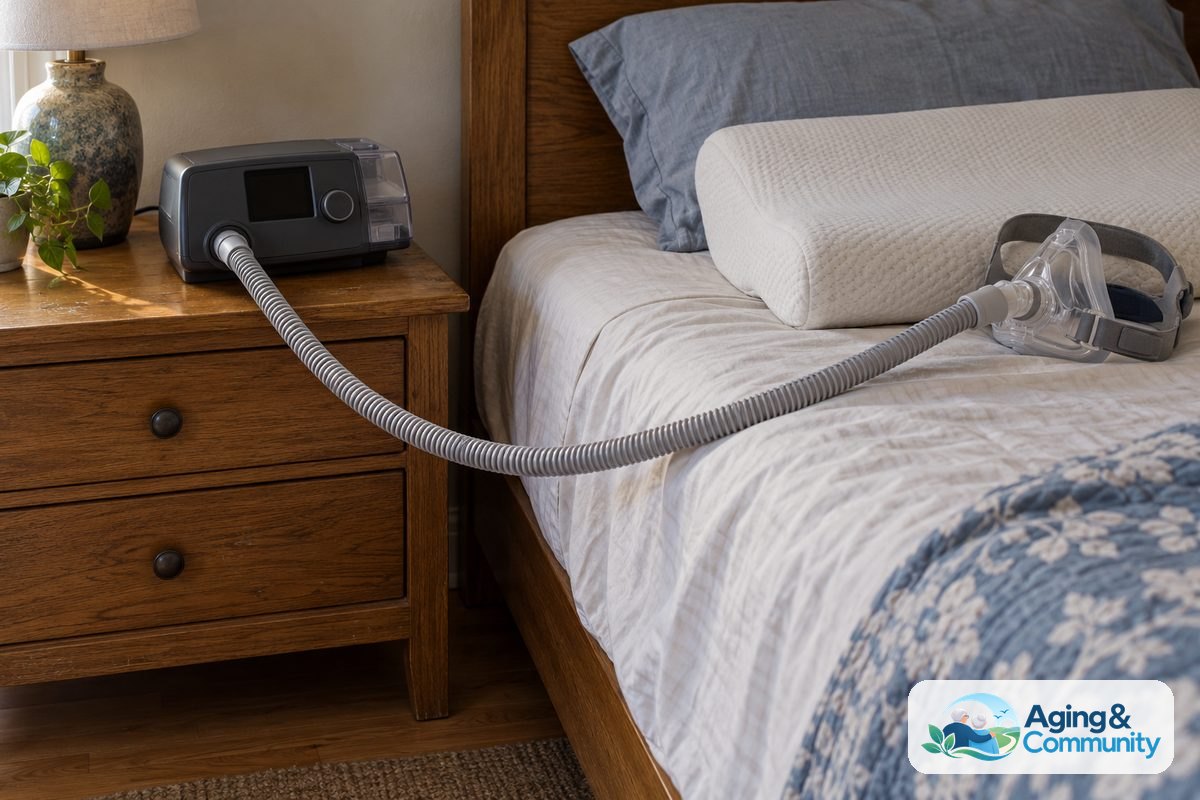
Choosing Between Pillow Materials and Shapes
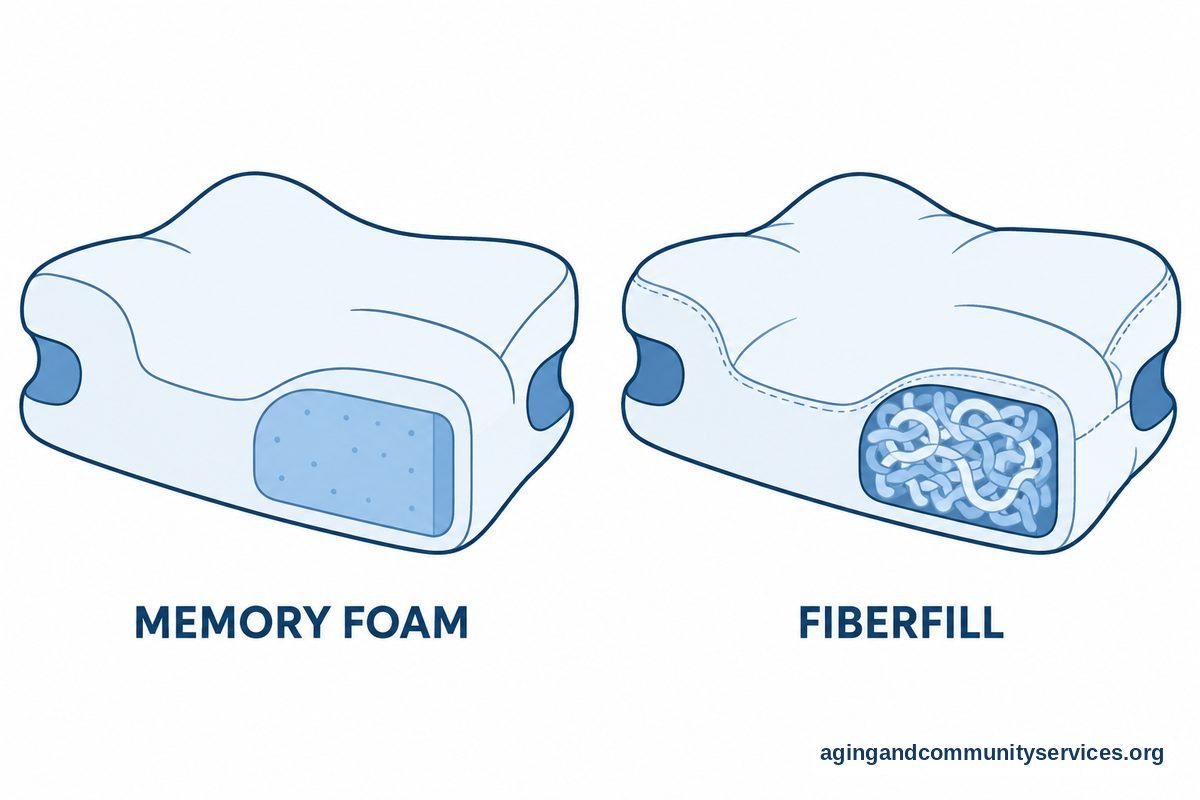
Different pillows offer unique benefits depending on how you sleep. Memory foam options give firm support that holds its shape, which helps side sleepers keep their mask floating over the cutout zone. Fiberfill designs feel softer and more like a traditional bed pillow, though you may need to fluff them regularly to maintain the shape, much like choosing the right bed rail or halo support for your room.
If you are exploring new equipment options, check how to choose a cpap machine and mask to see which cushion styles match your preferred sleeping posture. Our compression socks vs bare legs guide also helps improve nighttime comfort. The right pairing of mask style and pillow contours can make nightly sleep much more peaceful.
Frequently Asked Questions
How does a CPAP pillow stop mask leaks?
A CPAP pillow features hollow spaces or cutaways on each side. When you turn on your side, your mask extends into the open space rather than pressing against a firm cushion, which keeps the seal against your face from shifting.
Can I sleep on my back with a CPAP pillow?
Yes, most models feature an indented center cradle specifically shaped for back sleepers. This cradle supports the base of your skull while keeping your neck aligned, leaving the hose free to run upward without getting pinched.
Do I need a special pillowcase for a CPAP pillow?
Most CPAP pillows come with a custom zippered cover designed to match the curves and cutouts. Using a normal pillowcase can cover up the hollow areas and pull the fabric tight, which reduces the benefits of the cutouts.
How often should I clean my CPAP pillow?
You should wash the fabric pillow cover once a week in mild detergent, following the tag instructions. Spot clean the inner foam with a damp cloth and mild soap if needed, but do not place memory foam in the washing machine.
Will a CPAP pillow work with full face masks?
Yes, these pillows are designed to accommodate full face masks, nasal masks, and nasal pillows alike. The deep cutouts provide enough clearance so larger frames and forehead supports do not hit the bed.