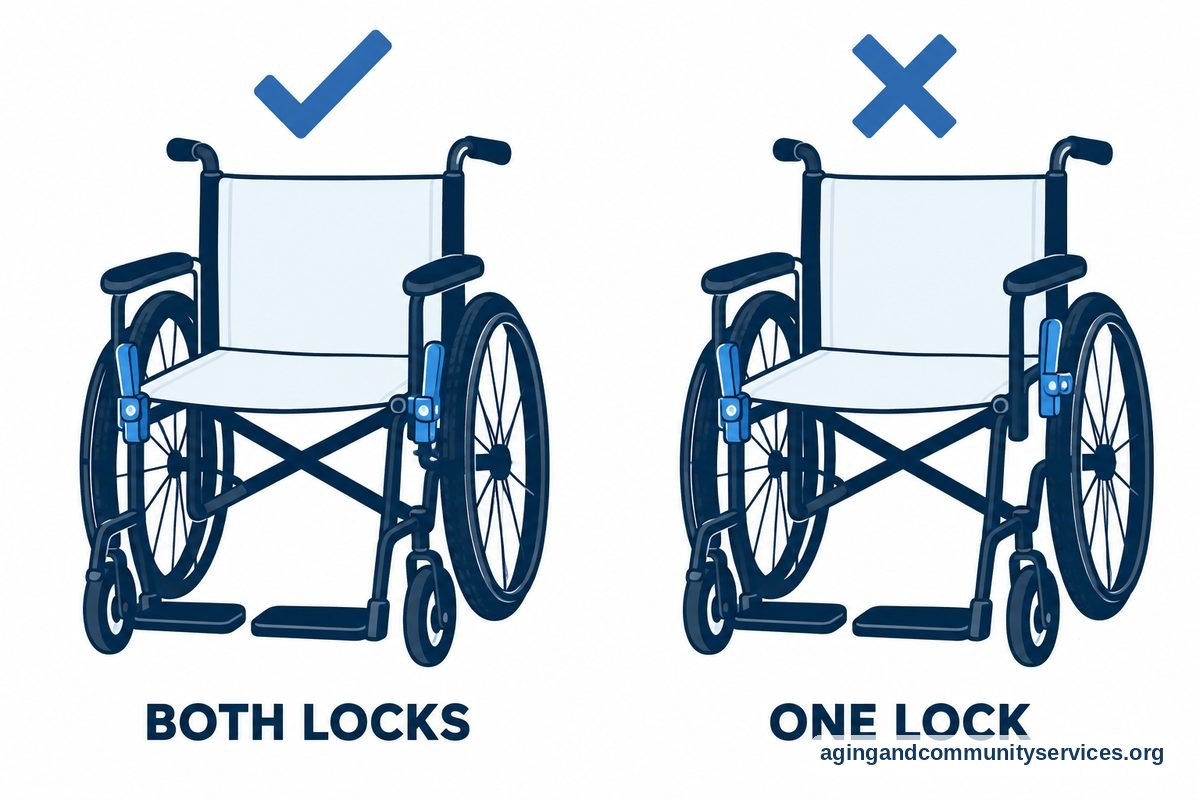
Learning how to use wheelchair brakes is one of the most important parts of operating a manual or power chair safely. On most manual chairs, you engage the brakes by firmly pushing or pulling a lever located near the large rear wheel until it presses tight against the tire. You always want to set both locks before standing up, sitting down, or resting in place.
Wheelchair locks are often called wheel locks rather than brakes because their main job is to keep a parked chair completely still. Using them correctly gives older adults and their caregivers peace of mind during transfers and daily routines. When you know your chair is securely held, moving around your home feels much more comfortable.

How to Use Wheelchair Brakes Step-by-Step
- Bring the chair to a full stop. Never try to force the levers while the wheels are turning, as this can wear down your tires or cause sudden jerking motions.
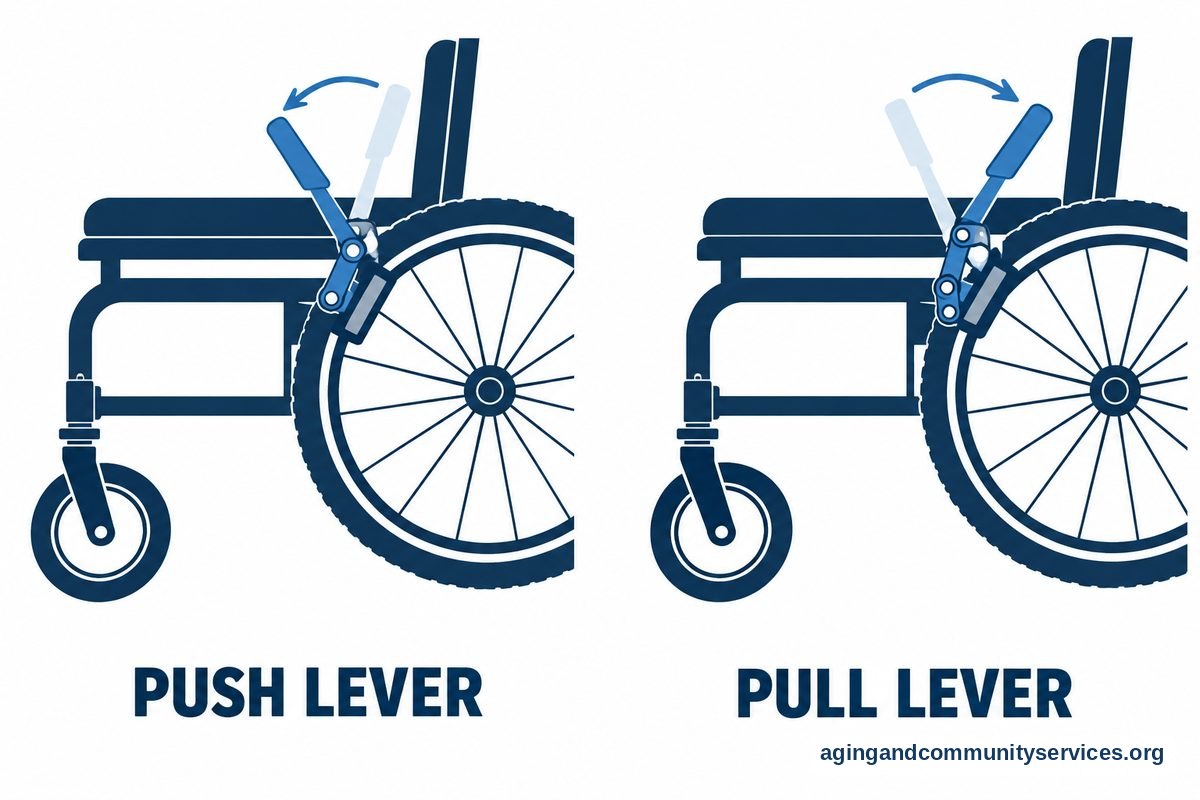
- Identify the style of brake lock. Most manual models have push-to-lock or pull-to-lock levers positioned just above or in front of the large rear wheel rims.
- Reach for the primary wheel lever. Grasp the handle firmly with your hand or have a caregiver reach down beside the seat frame.
- Push or pull until the clamp clicks. Move the lever firmly forward or backward until the metal bar presses deeply into the rubber tire and stays locked in place.
- Repeat the exact motion on the other side. Walk around or reach across to lock the second wheel, because setting only one side allows the chair to pivot.
- Test the hold before moving your body. Gently push the armrests forward to confirm neither wheel budges before you attempt to stand or sit.
- Release the locks smoothly when ready to roll. Move both levers back to their resting position so the metal shoe lifts completely clear of the tire tread.
Taking a few moments to double check your locks is an easy habit that helps support steady movement. Building safe habits is a central part of overall mobility, much like learning how to use wheelchair features correctly in your everyday living space.
Common Mistakes to Avoid
- Locking only one side of the chair: A chair with one open wheel will spin in a circle if someone pushes against it, creating an unstable surface during movement.
- Using the locks to slow down while moving: Wheel locks are parking mechanisms and are not meant to slow down a rolling chair like bicycle brakes.
- Ignoring low tire air pressure: Under-inflated pneumatic tires will not press firmly against the brake shoe, which makes the lock slip even when the lever is fully engaged.
- Forgetting to lock before a transfer: Moving from the seat to a bed, sofa, or car without engaged brakes can cause the chair to roll backward out from under you.
- Overlooking loose hardware on the frame: Screws and clamps holding the brake assembly can loosen over time, causing the lever to wobble out of line.
Simple oversights happen, especially when you are in a hurry or feeling tired. Taking your time during transfers, such as when figuring out how to use transfer board from wheelchair to car, ensures that every piece of equipment stays securely where you want it.
When to Seek Professional Guidance
If you notice that your wheelchair brakes are difficult to reach, feel too stiff to push, or slide along the tire even after locking, it is time to seek professional advice. Physical therapists and occupational therapists can evaluate your seating position, upper body strength, and home layout to recommend adjustments. You may also contact your local durable medical equipment supplier to service worn brake shoes or reposition the mounting clamps.
When you speak to a mobility specialist or therapist, describe exactly what happens when you try to use the levers. Tell them if your hands hurt when pushing the bar, if the chair still drifts across smooth tile floors, or if you cannot lean forward safely to reach the handles. The Eldercare Locator is a wonderful community resource that can help you find local support programs and equipment specialists in your area.
Understanding Different Types of Wheelchair Locks
Wheelchair locks come in several styles to match different grip strengths, mobility levels, and body mechanics, similar to choosing walking aids for balance. Understanding which style is mounted on your chair helps you operate the levers with the least amount of effort.
| Lock Style | How It Works | Best Suited For |
|---|---|---|
| Push-to-Lock | Lever is pushed forward away from the body toward the front caster to grip the tire. | Users with good arm extension and people who prefer pushing down using body weight. |
| Pull-to-Lock | Lever is pulled back toward the rear of the chair to tighten the clamp against the rubber. | Users who find pulling easier than pushing forward, or those who brush against levers during self-propulsion. |
| Scissor or Under-Seat Lock | Low-profile mechanism folds flat underneath the seat fabric out of the way. | Active users who transfer sideways frequently and do not want levers catching on clothing. |
| Hub or Drum Brakes | Internal braking mechanism inside the wheel hub, often operated by attendant handles. | Caregivers who need to control speed while walking down ramps or sloped sidewalks. |
If reaching the standard handles feels difficult, suppliers offer brake extensions. These are simple metal or plastic rods that slip over the existing levers to create a longer handle. The added length creates greater leverage, which means you need far less hand strength to push or pull the mechanism into place.
Maintaining Proper Wheel Grip and Alignment
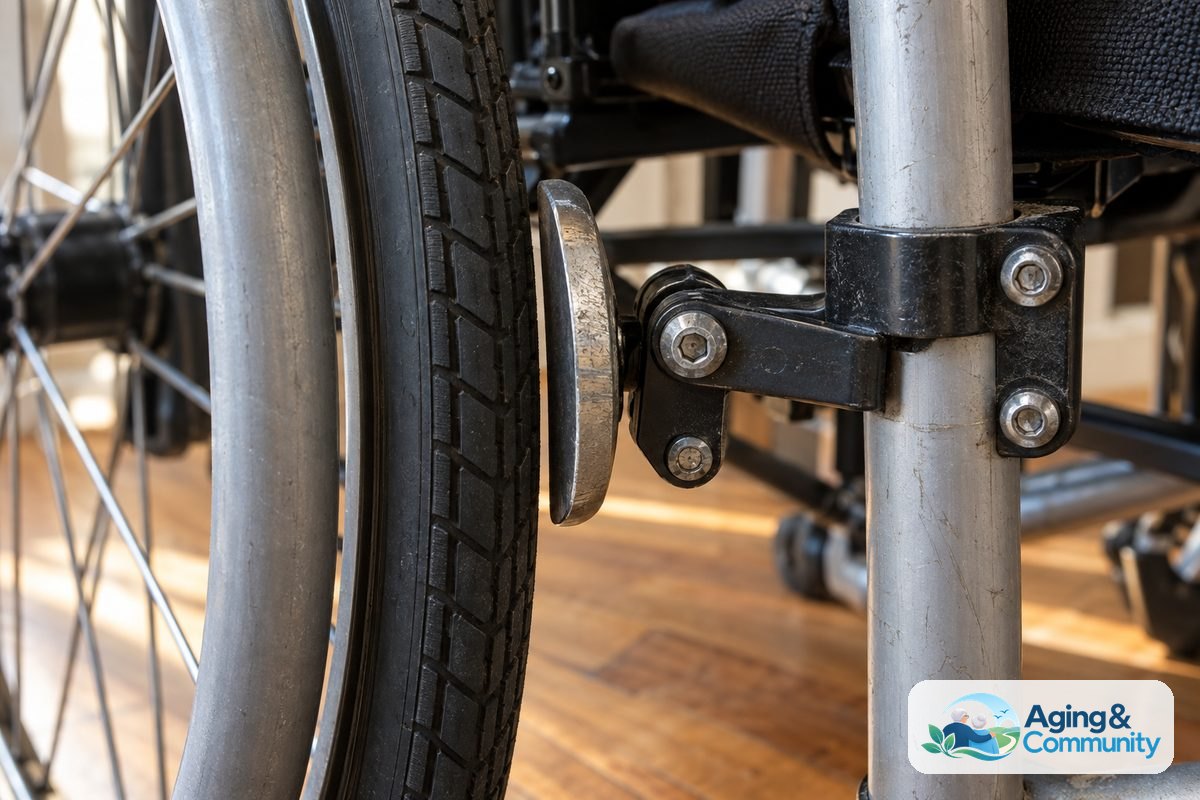
For your wheelchair brakes to hold firmly, the gap between the brake shoe and the tire must be set correctly. In general, when the brake is open, there should be about a quarter-inch gap between the metal bar and the tire surface. If the gap is too wide, the bar cannot press hard enough against the rubber to stop rotation.
Tire pressure plays an equally vital role in how well your brakes perform. Check pneumatic tires once a week to make sure they remain firm to the touch. If you have solid rubber tires that never go flat, keep an eye on tread wear. As solid tires wear down with age, they become smaller in diameter, which means you must slide the brake bracket forward along the metal frame to maintain proper contact.
Routine checks keep your equipment functioning as intended so you can move safely through every part of your home. The National Institute on Aging provides guidance on falls and falls prevention, highlighting how well-maintained assistive equipment can lower the risk of accidents around the house. A secure chair also simplifies hygiene tasks, such as understanding how to use wheelchair with commode setups safely in the bathroom.
Frequently Asked Questions
Can I adjust wheelchair brakes myself at home?
Minor adjustments are often simple if you have a basic hex key or wrench. Loosening the mounting bolt on the frame allows you to slide the whole assembly forward or backward slightly so the brake bar presses into the tire by about one-eighth to one-quarter of an inch. However, if you are unsure or lack hand tools, ask a medical equipment technician or occupational therapist to make sure the clamps are tightened to manufacturer specifications.
Why does my wheelchair roll even when the brakes are locked?
The most common culprit is low tire air pressure. If the tire is soft, the brake bar simply squishes the rubber without creating enough friction to stop the wheel from turning. Other causes include a loose mounting bracket that has slipped out of position or worn-down tire treads that no longer offer adequate traction against the brake pad.
What should I do if the brake levers are too hard to push?
If engaging the levers causes hand or shoulder strain, do not try to force them. Installing brake extensions can immediately improve your leverage so you need much less effort to lock the wheels. You can also consult a physical or occupational therapist to explore whether a pull-to-lock style or an alternative handle angle would better match your physical capabilities.
Do power wheelchairs have manual brake levers?
Most power wheelchairs use an automatic electromagnetic braking system that engages the second you take your hand off the joystick. However, they also feature manual freewheel levers on the motors so caregivers can push the chair by hand if needed. When these freewheel levers are switched to neutral, the chair will roll freely, so they must be turned back to the drive position for the electric brakes to work.
How do wheelchair brakes help during navigation on ramps or slopes?
Parking locks are intended strictly for holding a stationary chair, not for controlling your rolling speed downhill. To control speed on an incline, a person using a manual chair controls the handrims with their palms, or an attendant uses secondary attendant handbrakes, with differences explained for transfer chairs. Trying to use parking locks while rolling down a ramp can cause the wheels to stop unevenly, creating an unstable tilt.