

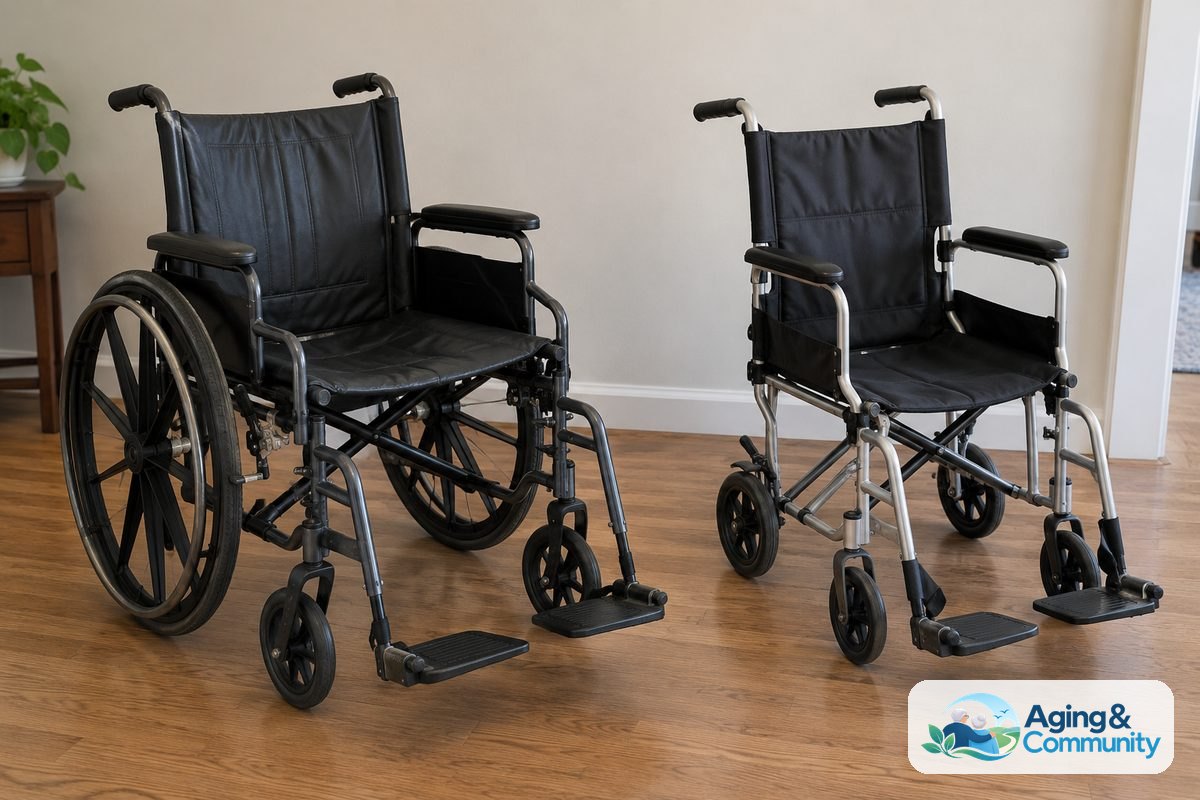
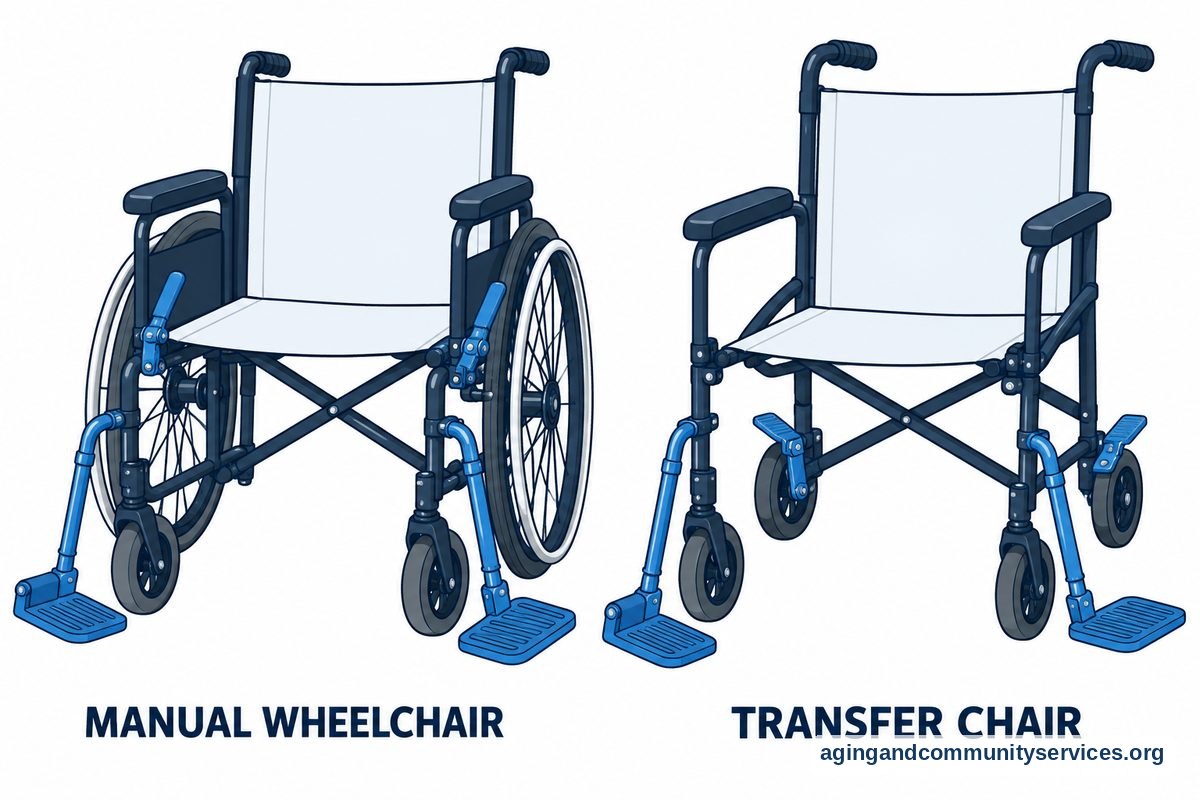
When comparing a wheelchair vs transfer chair, the main difference comes down to who moves the seat. A standard wheelchair has large rear wheels that let the person sitting push themselves forward independently. A transfer chair, often called a transport chair, has four small wheels and requires a caregiver to push from behind.
Finding the right fit between these two mobility options can make daily life much easier for older adults and their family caregivers. Each chair serves a clear purpose, whether you need an everyday seat for independence at home or a light frame for quick trips to the doctor. Taking the time to understand the differences will help you choose the right mobility tool with confidence.
Understanding the Wheel Design and Propulsion
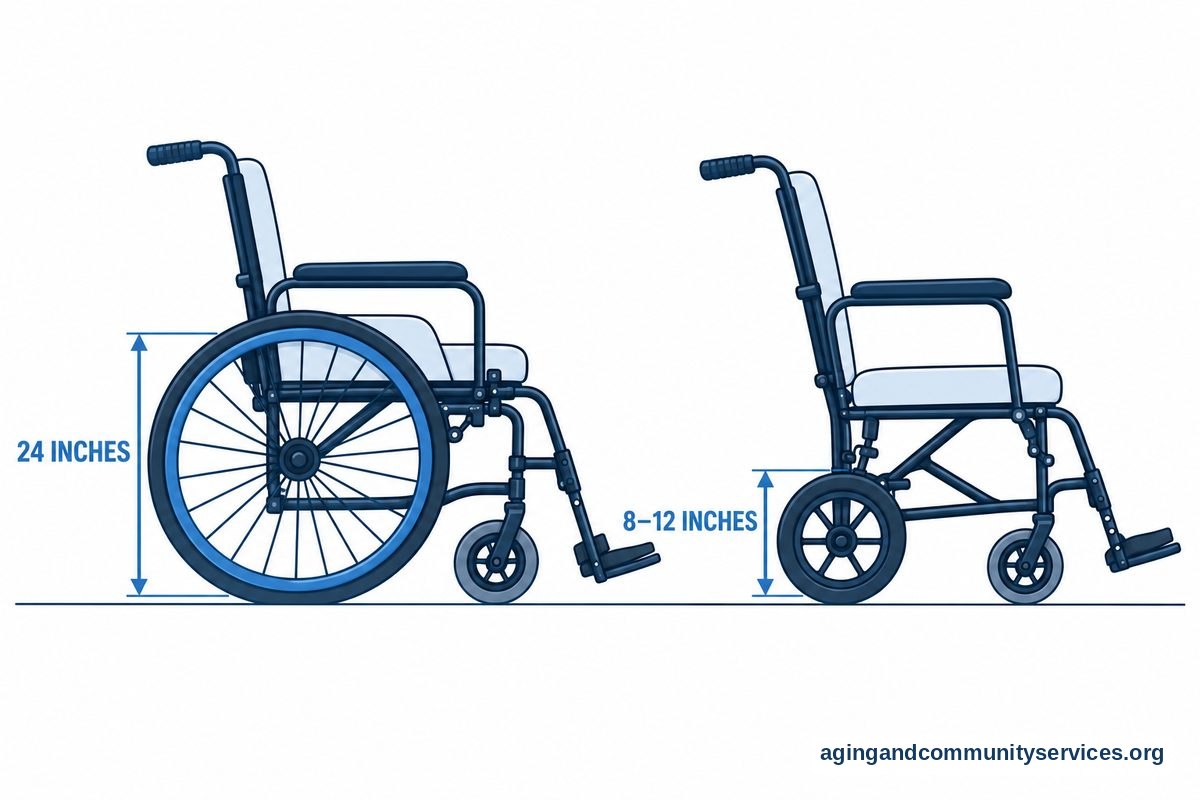
The easiest way to tell these two chairs apart is to look at the rear wheels. A traditional wheelchair features large rear wheels, usually around twenty-four inches across. These wheels have an outer hand rim attached to them. This design allows the rider to grip the rims and roll themselves forward, turn, or stop without needing help from another person.
Transfer chairs have four small wheels, typically around eight to twelve inches across. Because these rear wheels are small, there are no hand rims for the person in the seat to reach. The user cannot propel the chair on their own. Instead, a caregiver must stand behind the chair, hold the handles, and push it forward.
If you or your family member wants to move around independently inside the house or outdoors, a manual wheelchair is often the necessary choice. However, if arm strength is limited or a helper is always present, the simpler setup of a transfer chair might be all you need.
Comparing Weight and Portability
Weight is a huge factor for families who travel frequently or drive to medical appointments. Transfer chairs are built with light travel in mind. Most transfer chairs weigh between fifteen and twenty-five pounds. This makes them relatively easy for a family member to fold up, lift, and slide into the trunk of a car or back seat.
Standard manual wheelchairs are significantly heavier. A typical manual model weighs between thirty-five and forty-five pounds. While the seat and frame fold flat, lifting that amount of weight into a car can strain the back of an older caregiver. Some lightweight wheelchairs do exist, but they are still generally heavier than a basic transfer model.
For people planning frequent outings, knowing how to choose a transport chair can make errands much less tiring for everyone involved. If you only plan to use the chair outside the house for short walks or clinic visits, the lighter weight of a transfer chair offers a clear benefit.
Comfort and Everyday Seating Support
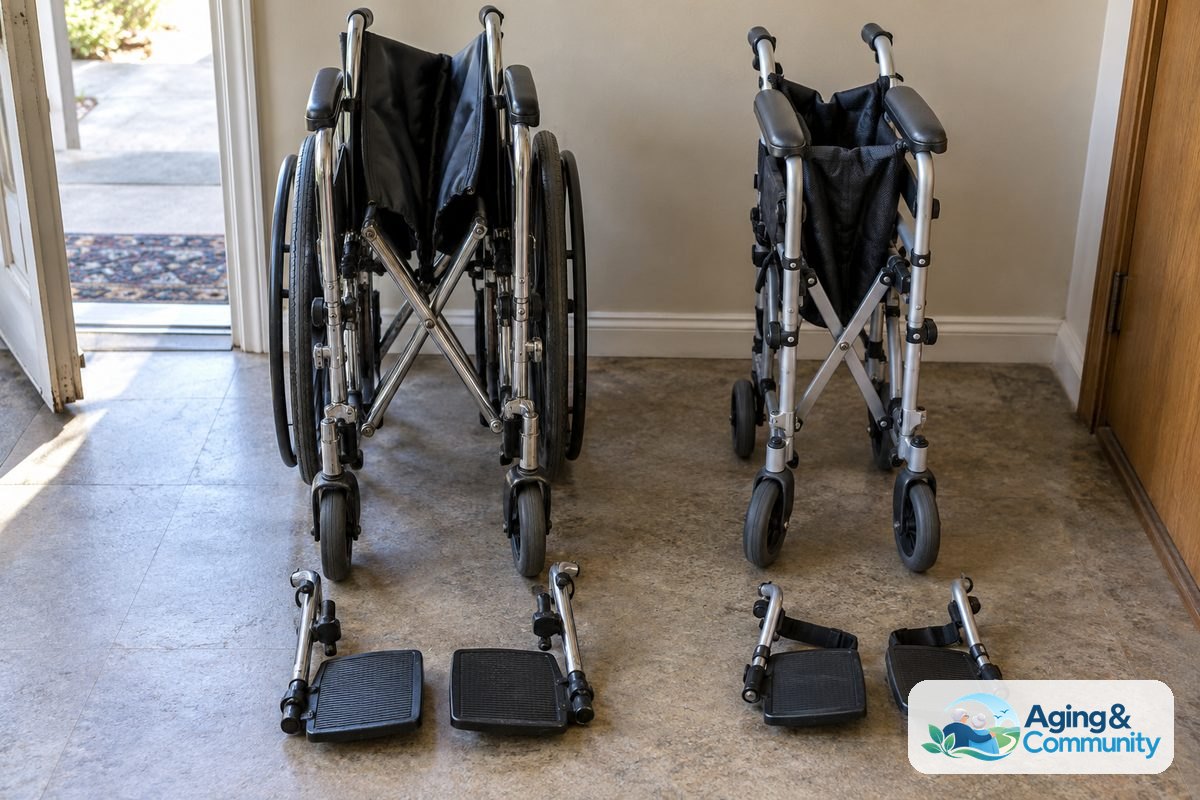
Another major difference lies in how long someone can comfortably sit in the chair. Wheelchairs are constructed for long-term daily use. They often feature sturdy vinyl or nylon seating, padded armrests, and options to add specialized pressure-relief cushions. The frame is rigid and designed to support proper posture over several hours.
Transfer chairs are designed for short trips rather than all-day seating. The seats are usually made of lighter, thinner nylon fabric so they can fold up into a compact package. While perfectly comfortable for a thirty-minute trip across a hospital lobby, they may not offer enough spinal support or padding for sitting throughout an entire afternoon.
If the user spends most of their waking hours in the seat, learning how to choose a wheelchair with proper back support and footrest adjustments is essential. Sitting for extended periods without proper posture support can lead to general soreness and discomfort.

Navigating Indoors, Outdoors, and Uneven Ground
Where you plan to use the chair matters just as much as who pushes it. Large wheelchair wheels roll over thick carpets, doorway thresholds, and sidewalk cracks with relative ease. The large diameter gives the user better leverage, and the rider can pop the front casters up slightly to clear small bumps.
Transfer chairs can struggle on rough outdoor surfaces. Because all four wheels are small, they can get caught in sidewalk seams, gravel paths, or thick grass. Pushing a transfer chair over rough ground requires more physical effort from the caregiver, who may need to tip the chair back gently to clear obstacles.
Inside a home, however, a transfer chair has a narrow frame that glides easily through tight bathroom doorways and narrow hallways. If you want to compare how each model handles inside a house, reviewing a detailed wheelchair vs transport chair breakdown can help you match dimensions to your hallway widths.
Key Features at a Glance
Here is a simple summary comparing how these two styles match up side by side:
| Feature | Standard Wheelchair | Transfer Chair |
|---|---|---|
| Rear Wheel Size | Large (around 24 inches) | Small (8 to 12 inches) |
| Self-Propulsion | Yes, user can push themselves | No, requires a helper to push |
| Typical Weight | 35 to 45 pounds | 15 to 25 pounds |
| Primary Purpose | Daily mobility and independence | Short trips and easy transport |
| Trunk Loading | Heavier, bulkier to lift | Lightweight, quick to fold |
| Brakes | Wheel locks reached by rider | Hand brakes or foot locks for helper |
To read more about specific design differences between these models, you can also explore this guide on wheelchair versus transport wheelchair designs.
Safety and Proper Transfers
Safety is the top priority whenever moving someone into or out of a seated mobility aid. Both styles feature parking brakes, but they are operated differently. Wheelchair brakes are located on the sides of the wheels so the seated person can lock them independently before standing up.
Transfer chairs usually have foot-operated locks near the rear wheels or handbrakes mounted on the pushing handles, similar to a bicycle. It is critical that the caregiver locks these brakes every single time the user stands up or sits down. An unlocked chair can roll backward during a transfer, increasing the risk of a fall.
According to the National Institute on Aging: Falls and Falls Prevention resources, keeping pathways clear and using stable mobility aids properly can lower the risk of accidents at home. Always make sure the footrests are swung out of the way before standing up so feet do not catch on the plastic plates.
Next Steps for Choosing the Right Option
If you are trying to decide which style fits your household, consider taking these practical steps before making a final selection:
- Measure your home: Take a tape measure to your narrowest doorways, particularly the bathroom and bedroom entries. Compare these numbers to the overall width of the chairs you are considering.
- Test your vehicle trunk: Make sure you have enough trunk space to lay the folded frame flat, and confirm that the person who drives can comfortably lift that weight.
- Consult a physical or occupational therapist: A physical therapist or occupational therapist can assess sitting balance, posture, and arm strength to recommend the safest option.
- Rent before buying: Many local medical supply shops offer weekly rentals. Trying both styles for a few days at home lets you see which one works best in real life.
- Contact community resources: If you need guidance on local mobility equipment programs or caregiver support, the Eldercare Locator connects families to local aging services across the country.
- Plan for your living space: Learn about making home modifications by reading the National Institute on Aging: Aging in Place guide to create safer walking and rolling paths throughout your home.
Frequently Asked Questions
Can one person use a transfer chair completely alone?
No, a transfer chair cannot be used alone for mobility. Because the rear wheels are small and lack push rims, the person sitting in the chair cannot move it forward. A family member or caregiver must be present to push and steer the chair.
Can you put a specialized cushion in a transfer chair?
Yes, you can place an aftermarket cushion on the seat of a transfer chair to improve comfort. However, keep in mind that a thick cushion will raise the person higher in the seat. This can change how their feet reach the footrests and may alter their center of balance, so choose a low-profile cushion.
Are transfer chairs covered by insurance?
Coverage depends entirely on your specific insurance policy and medical necessity. Many insurance plans require a doctor to document why a specific mobility device is needed for daily living activities inside the home. Speak with your healthcare provider to understand your specific benefits and requirements.
Can a standard wheelchair also be pushed by a caregiver?
Yes, standard wheelchairs come equipped with rear push handles so a caregiver can easily push from behind when the rider gets tired. However, the chair remains heavier and wider than a transfer chair, which makes it slightly harder to steer through tight corners or lift into a car.
Do transfer chairs have seat belts?
Many transfer chair models do come with a simple lap belt attached to the frame. This belt is designed to keep the user safely positioned against the seat back while rolling over thresholds or small bumps. It should never be used as a restraint, but rather as a secure support during movement.