

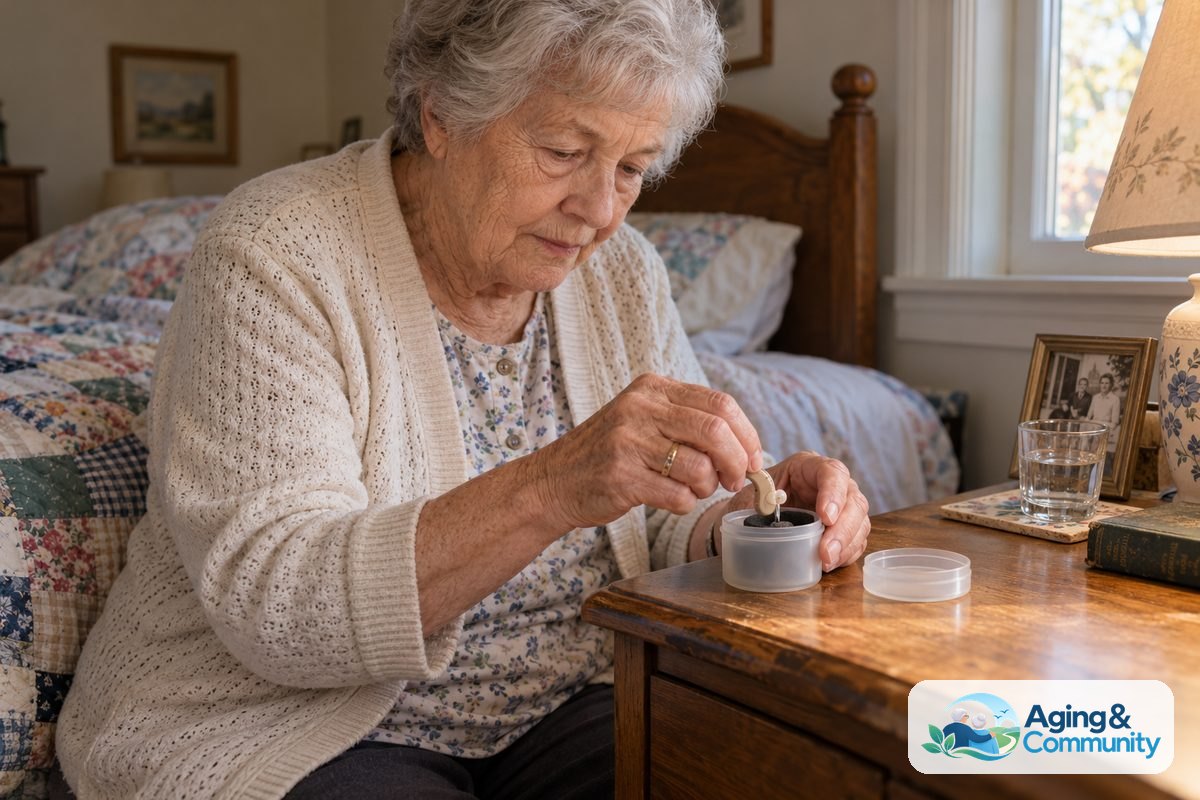
Learning how to use a hearing aid drying cup is a simple daily habit that removes moisture from your devices overnight. To use the cup, you open the lid, place an active desiccant block or pellet inside, set your opened hearing aids on the foam liner, and twist the lid tightly shut. This passive drying method protects delicate internal wires while you sleep so your devices stay clear and reliable.
How to Use a Hearing Aid Drying Cup in Six Easy Steps
Using a drying jar takes less than two minutes each night. Follow these simple steps before you head to bed.
- Clean and inspect your devices: Wipe your hearing aids with a dry cloth to clear away daily earwax and dust before opening the cup. Using gentle hearing aid cleaning tools can help you safely remove wax from small openings without pushing debris inside.
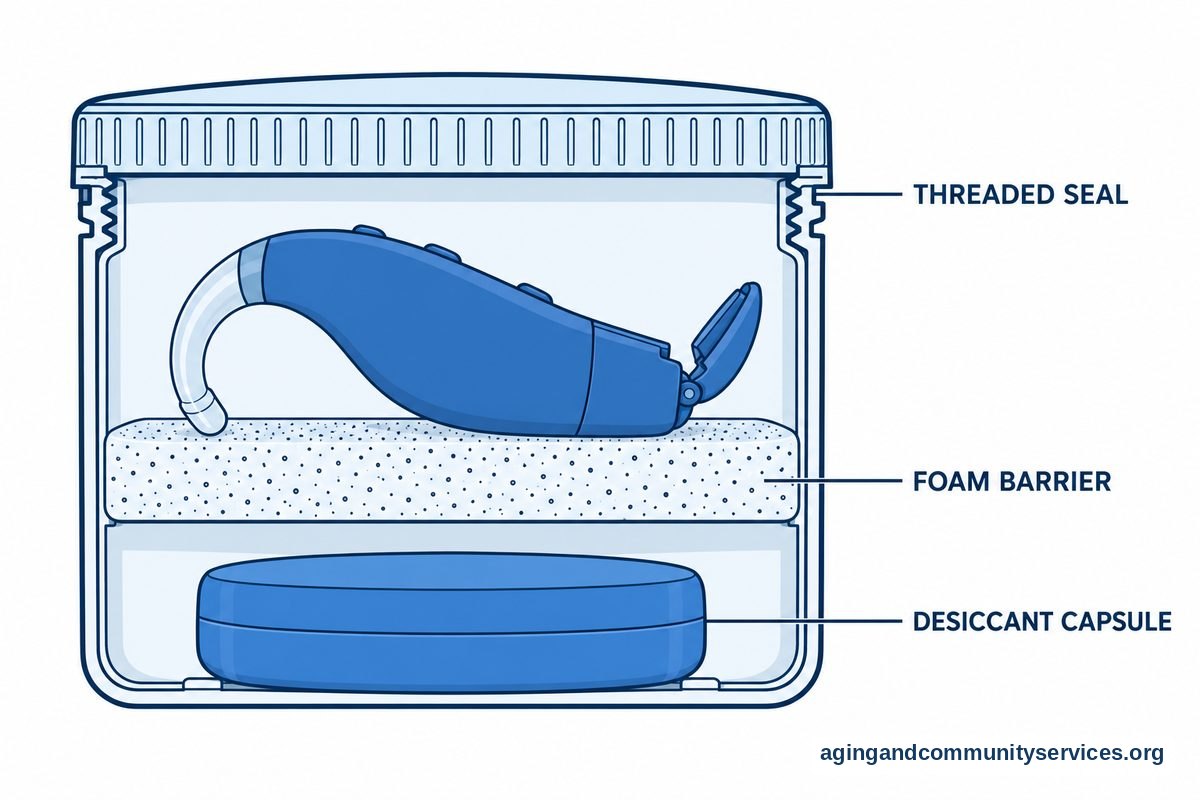
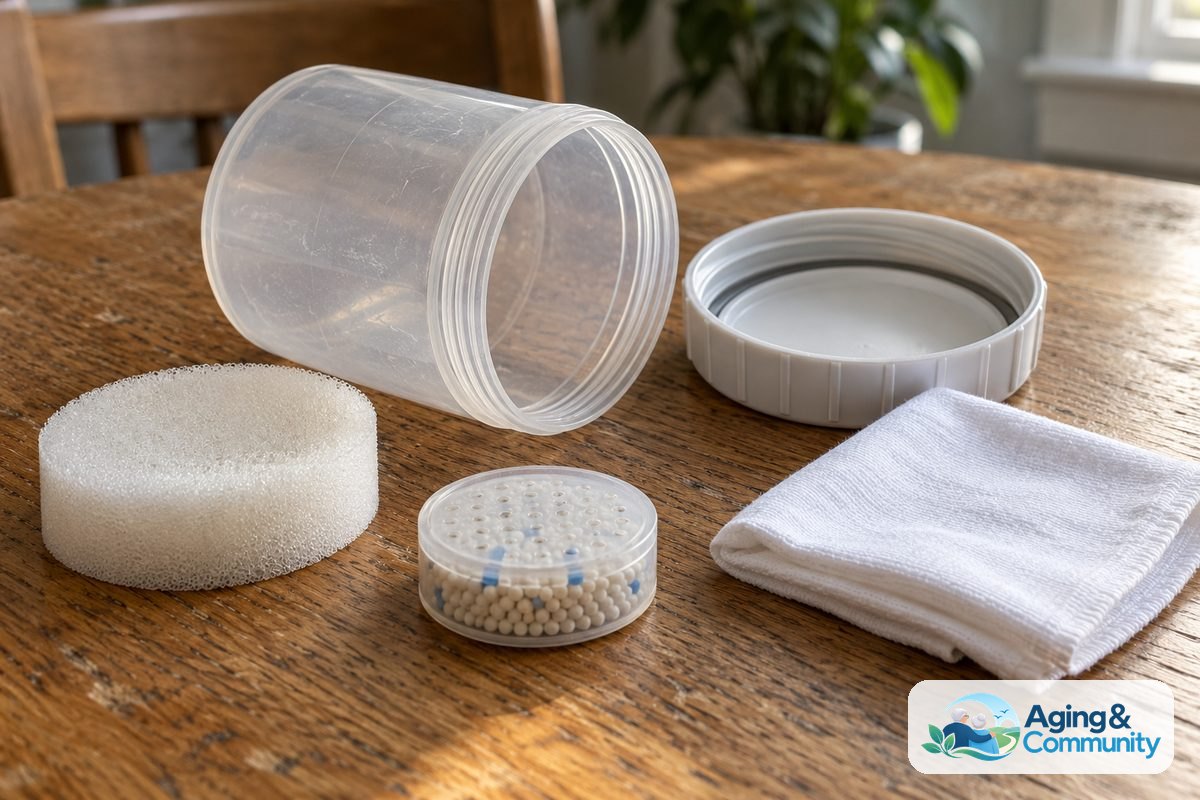
- Prepare the desiccant inside the jar: Open the drying jar and ensure the absorbent material rests at the bottom. Most kits rely on specialized hearing aid drying capsules that soak up damp air from the container.
- Ensure the protective pad is in place: Check that the soft foam cushion or plastic basket sits directly above the drying block. Your hearing devices should never touch the bare drying chemical directly.
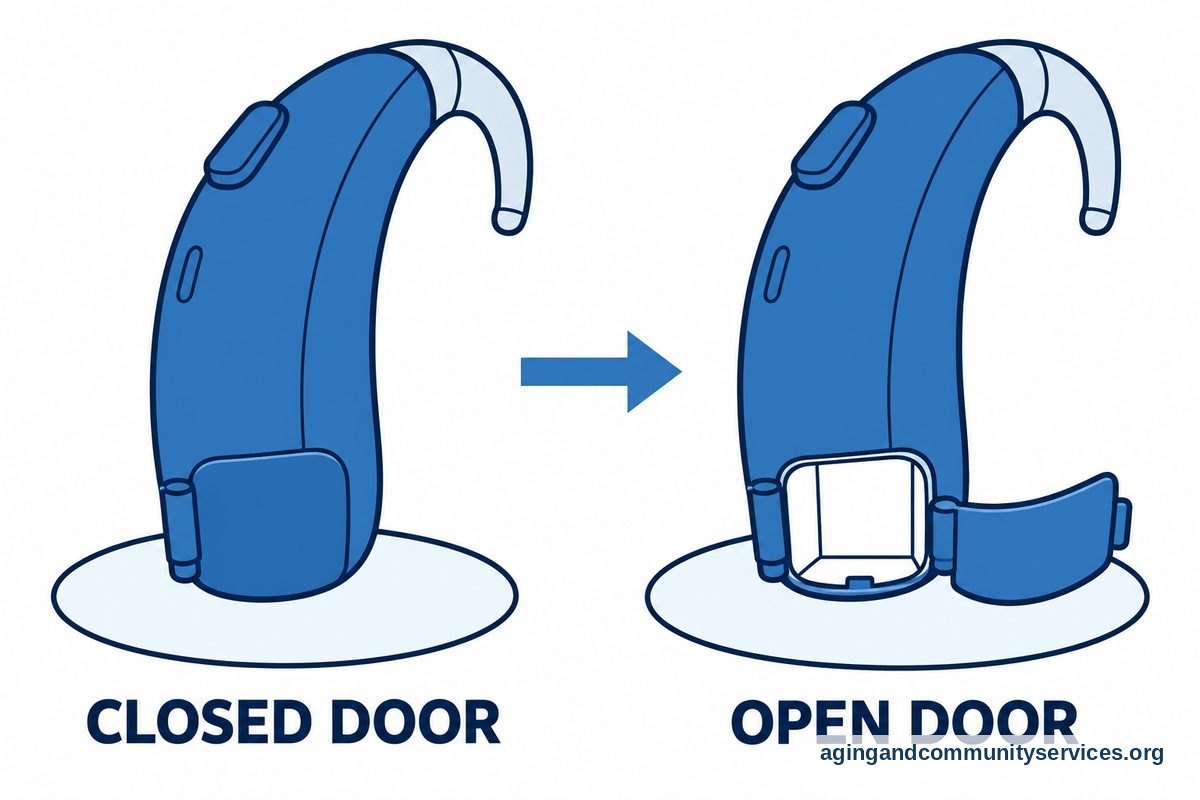
- Open the battery doors: Turn off your devices by swinging open the battery compartment fully. If your aids use disposable cells, learning how to use hearing aid batteries properly means leaving the cell loose inside the open door or setting it aside so moisture escapes from the inner chamber.
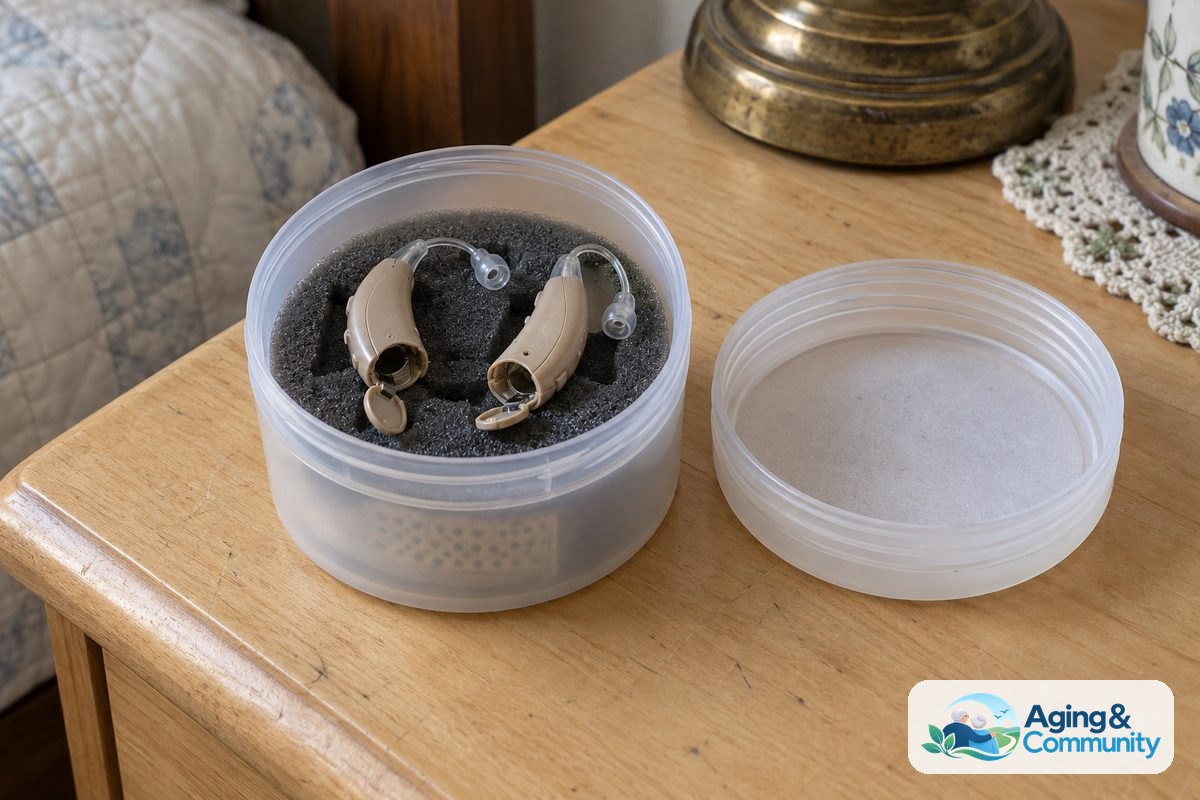
- Place the aids inside and close the lid: Set the opened aids gently onto the foam pad. Screw the lid down firmly so no outside room air or humidity leaks inside the jar overnight.
- Remove your aids in the morning: When you wake up, open the jar, take out your aids, and close the battery doors. Always seal the container immediately so the absorbent drying block does not waste its strength absorbing room air during the day.
Common Mistakes to Avoid
Drying jars are simple tools, but a few basic errors can keep them from working well.
- Leaving the jar lid loose: An unsealed jar pulls humidity out of the bedroom air rather than drying out your hearing devices.
- Placing aids directly on the chemical block: The drying salts can leave powdery residue on your microphones without the foam barrier in place.
- Leaving battery compartments snapped shut: Trapped moisture cannot escape through closed plastic doors while sitting in the jar.
- Putting wet batteries back in your ears: Always let everything sit in the jar for at least six to eight hours for a complete drying cycle.
- Using the same desiccant after it changes color: Once the indicator pellets switch color, they cannot hold more moisture and must be replaced or reactivated.
- Placing the cup near bathroom steam: Keep your drying jar on a dry nightstand rather than a humid bathroom counter.
When to Contact Your Audiologist or Hearing Specialist
Daily drying helps keep your aids clear, but it cannot solve every sound issue. If your hearing aids sound scratchy, quiet, or dead even after a full night in the jar, reach out to your hearing care clinic. Let the staff know how long the sound has been weak and whether you see any visible wax or buildup on the receiver, or learn how to change wax guards.
You should also call your provider if you see rust inside the battery compartment or notice a sticky film on the shell. An audiologist can inspect the internal parts under a microscope and run a vacuum cycle to clear deep blockages. Older adults who want extra support with home health tasks can also reach out to the Eldercare Locator for community services and local aging resources.
How a Drying Cup Works to Protect Your Devices
Everyday humidity, sweat, and body heat enter hearing aid cases through microphone ports and tiny seams. Over time, that damp air can cause corrosion on metal contacts and weaken delicate sound receivers. A drying cup creates a sealed, low-humidity microclimate that pulls water vapor out of tiny spaces without using heat or electricity.
Because passive cups use no heat, they are safe for all styles of hearing devices, including behind-the-ear and custom in-the-ear models. The foam pad keeps physical distance between the drying agent and the devices, allowing clean dry air to circulate smoothly around the whole unit.
Caring for Your Drying Jar and Desiccant
A drying cup needs very little maintenance, but keeping it clean ensures your devices stay hygienic. Wipe the plastic rim of the container once a month with a dry paper towel to remove dust that could break the airtight seal. Never wash the cup with water while the desiccant block is inside, as water will ruin the drying material instantly.
Check the color of your drying block every week under bright light. Most blocks start bright orange or blue and turn white, pale yellow, or light pink when full of water. When the color shifts completely, follow the product directions to replace the capsule or warm it in an oven to release the trapped dampness.
Frequently Asked Questions
How long should hearing aids stay in a drying cup?
Hearing aids should stay in the sealed cup for at least six to eight hours. Most people put their devices into the cup right before going to sleep and take them out in the morning when dressing.
Can I leave rechargeable hearing aids in a drying cup?
Most rechargeable devices need to sit in their powered charging dock overnight rather than a non-powered jar. If your rechargeable aids feel damp from sweat, check with your hearing professional or review your user guide before placing them in a passive desiccant cup, as they cannot charge inside a standard jar. See the MedlinePlus hearing aids overview for more background.
How often should I change the drying capsule inside the cup?
Most disposable drying blocks last between one and two months depending on the climate and daily humidity in your area. Watch the built-in color indicator on the block to know the exact time for a fresh replacement.
Can I put the cup in the bathroom?
It is best to keep your drying jar in a bedroom or living area. Bathrooms collect heavy steam from showers and sinks, which can seep into the jar when opened and exhaust the drying material much faster.