

Fall prevention for elderly at home products can make daily routines steadier, easier, and more comfortable. The right mix often includes grab bars, better lighting, non-slip surfaces, supportive shoes, and simple alert tools, along with a careful look at how each room is used.
No single product can make a home completely fall-proof. Still, the National Institute on Aging says home changes, exercise, vision checks, and medication reviews can lower the risk of falls, so it is worth pairing useful products with good habits and advice from a doctor, physical therapist, or occupational therapist.
Start With the Home, Not the Product
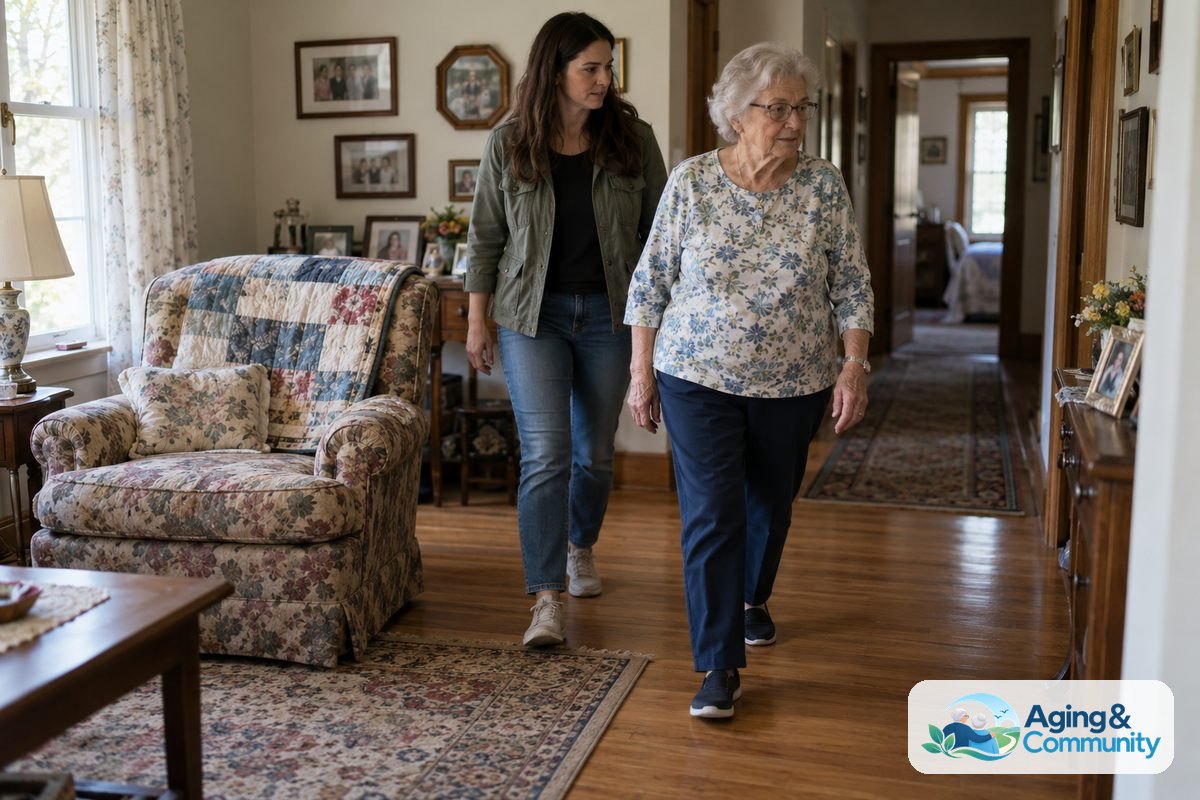
Before buying anything, walk through the home during a normal day. Notice where hands reach for support, where feet catch on rugs, and where lighting feels dim. A product is most helpful when it solves a real problem in a real place.
Many families start with a simple room-by-room list. A written fall prevention checklist can help you look at floors, stairs, bathrooms, bedrooms, and entryways without missing common trouble spots.
Focus first on the areas used most often. These are usually the bathroom, bedroom path, kitchen, favorite chair, hallway, and front or garage entry. Small changes in these spaces may make everyday movement feel more secure.
- Look for trip points: loose rugs, raised thresholds, cords, clutter, and uneven flooring.
- Check hand support: places where someone reaches for a towel bar, door frame, counter, or furniture.
- Notice lighting: dark corners, shadowy stairs, and switches that are hard to reach.
- Watch daily routines: getting out of bed, bathing, cooking, laundry, and bringing in mail.
If walking, balance, dizziness, or weakness is a concern, ask a health professional for guidance. An occupational therapist can often suggest home setup changes that fit the person, not just the room.
Bathroom Products That Add Support
The bathroom is a common place to start because surfaces can be wet, hard, and tight. Good bathroom products should add stable handholds, reduce slipping, and make bathing less rushed.
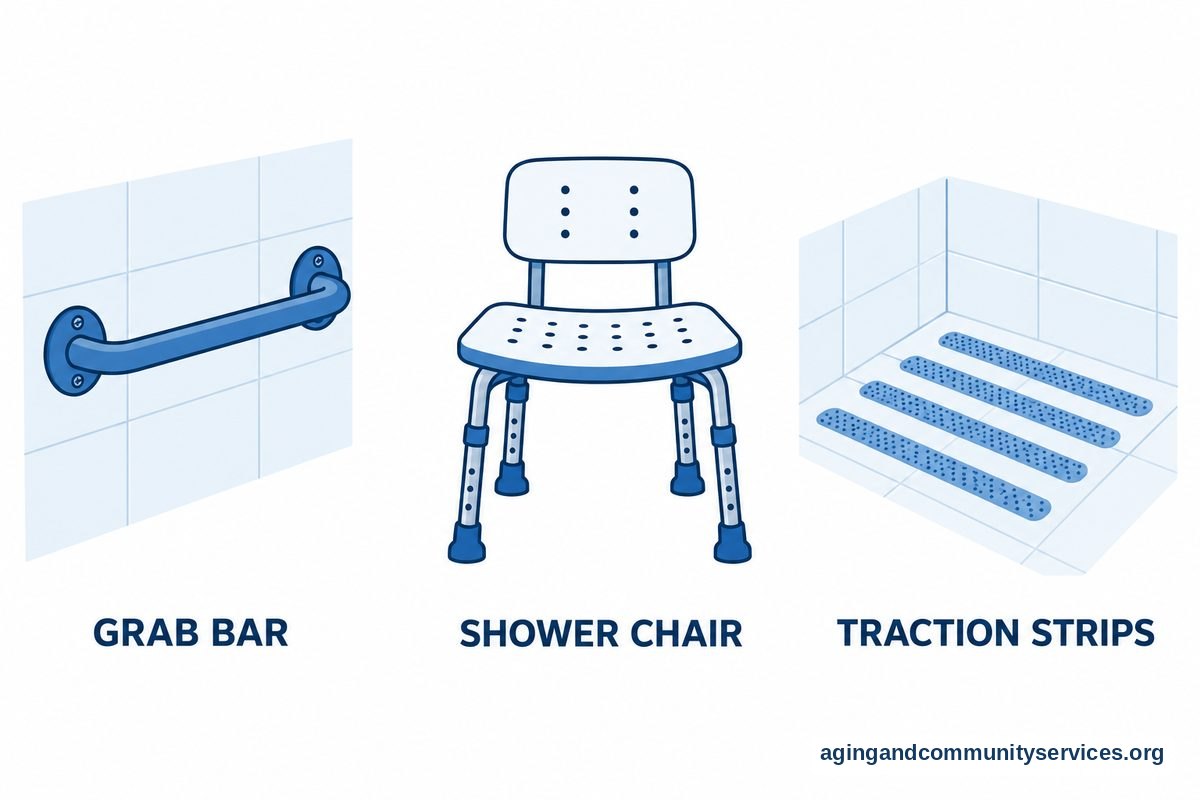
Grab bars are often more useful than towel bars or suction handles. Installed grab bars can give steady support near the toilet, inside the shower, and at the tub edge. Placement matters, so it helps to ask a professional installer or occupational therapist where they should go.
A shower chair or bath bench can make bathing less tiring. A hand-held shower head may also help because the person can sit while washing. Non-slip bath mats or adhesive strips can add traction, but they should lie flat and be checked often.
For a deeper look at this room, a guide to bathroom safety equipment can help you compare common items and where they are used.
- Grab bars: choose wall-mounted bars installed into proper support when possible.
- Raised toilet seat: may reduce how far a person must lower or lift the body.
- Toilet safety frame: adds arm support for sitting and standing.
- Shower chair: gives a seated option for bathing.
- Non-slip strips: add grip inside tubs or showers when installed on a clean surface.
Avoid crowding the bathroom with too many items. The goal is a clear path, stable support, and easy reach. If a product shifts, wobbles, or blocks movement, it may not be the right fit.
Lighting, Floors, and Stairs
Lighting is one of the simplest home changes. Bright, even light helps people see edges, pets, cords, and changes in floor level. Motion-sensor night lights can help on the path from the bed to the bathroom.
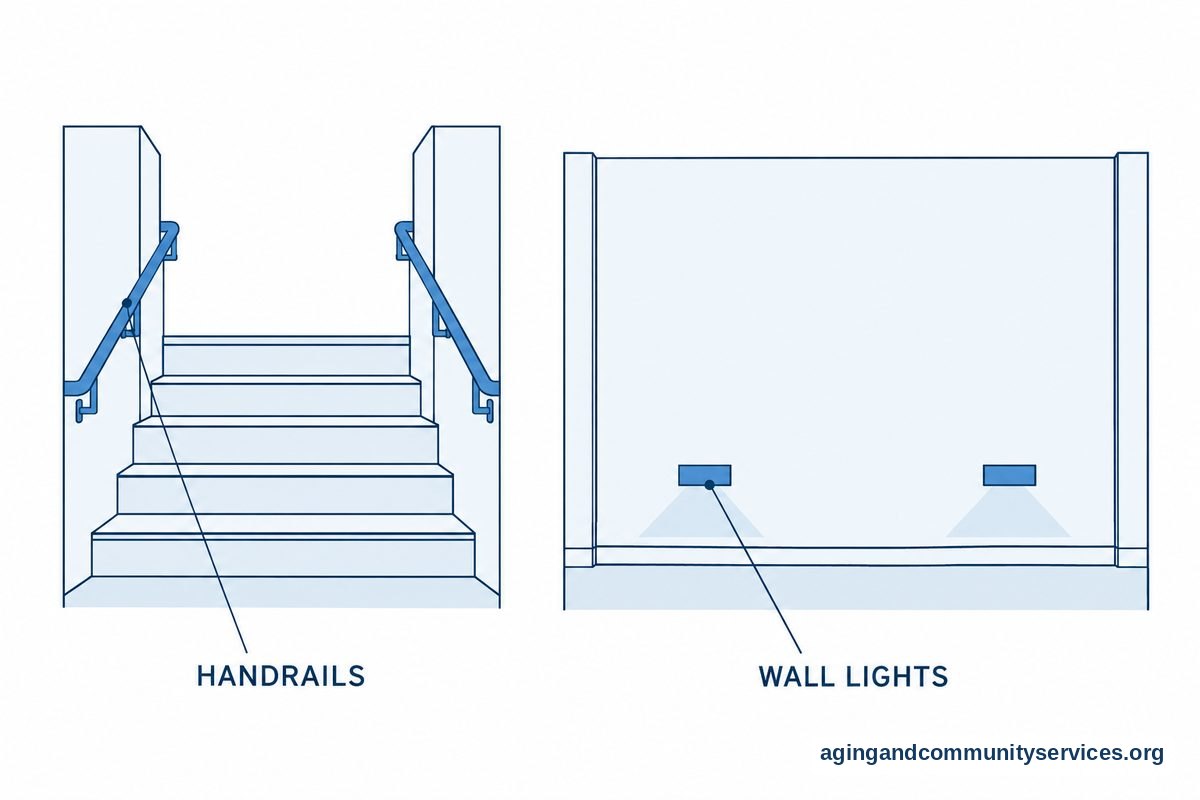
Place lights at both ends of hallways and stairs when possible. Lamps should be easy to turn on without crossing a dark room. Rocker switches, touch lamps, or voice-controlled plugs may help if small switches are hard to use.
Floors should be clear and predictable. Remove loose throw rugs when possible, or secure them with non-slip backing made for that rug and floor type. Keep cords along walls, not across walking paths.
Stairs need special attention. Handrails on both sides, strong lighting, and clear step edges can make stairs easier to judge. If stairs feel difficult, a physical therapist can help review strength, balance, and safe ways to move on steps.
| Area | Helpful Product | What to Check |
|---|---|---|
| Hallway | Motion night lights | Light reaches the full walking path |
| Stairs | Second handrail | Rails feel secure and run the full length |
| Living room | Cord covers | Cords do not cross main paths |
| Entryway | Non-slip mat | Mat lies flat and does not curl |
Home safety products work best when they are easy to keep using. If a mat bunches up, a light is too dim, or a rail is awkward to reach, adjust it rather than hoping it will be fine.
Footwear, Mobility Aids, and Daily Movement
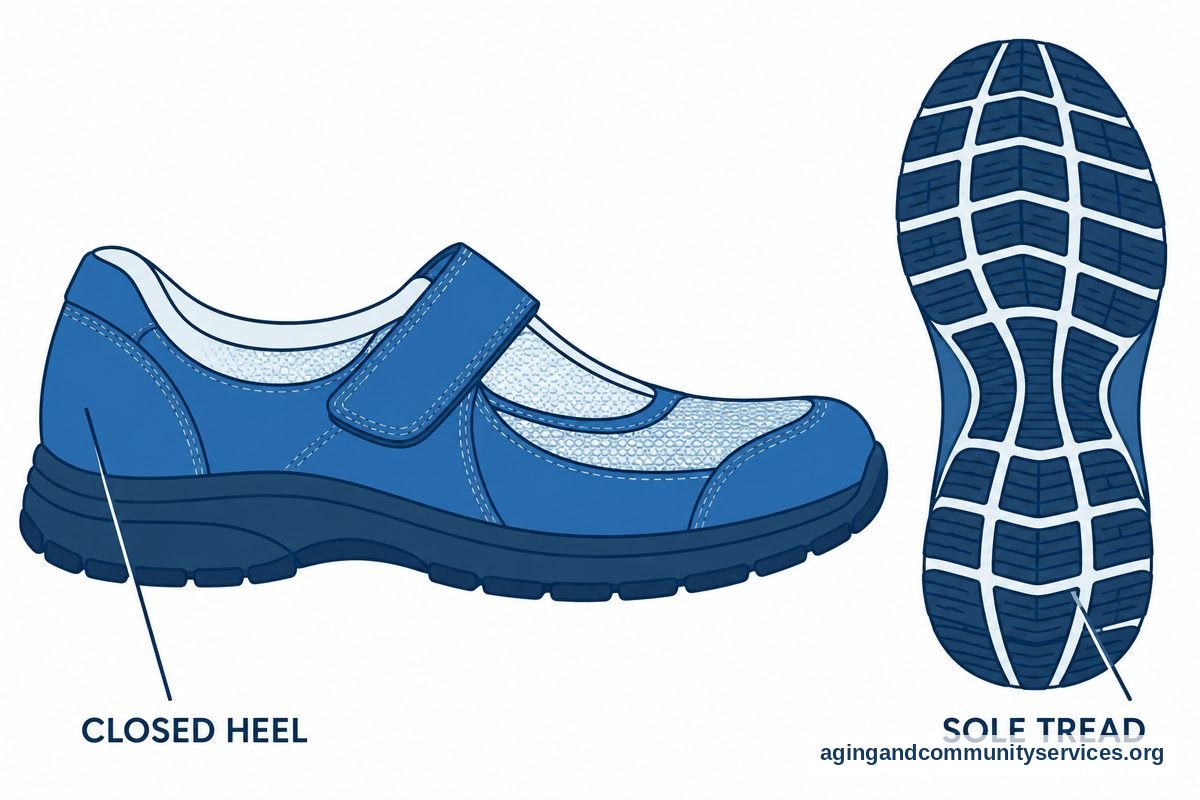
Shoes are part of home safety, even indoors. Slippers that slide, stretch out, or have smooth soles may make walking less steady. A supportive shoe with a firm heel, good fit, and non-slip sole can be a better daily choice.
Some people use a cane, walker, or rollator. These should be the right height and type for the person using them. A physical therapist can help fit the device and teach safe use, including turning, sitting, and moving through doorways.
If you are comparing shoes, a guide to shoes for safer walking can help explain features to look for. Fit matters more than labels, so try shoes with the socks normally worn at home.
Exercise is not a product, but it belongs in the same conversation. The National Institute on Aging notes that balance and strength activities can lower the risk of falls when done safely. A doctor or physical therapist can suggest what is suitable for the person’s health and ability.
- Good indoor shoes: closed back, stable sole, and enough room for toes.
- Cane or walker: fitted to the person, not borrowed without adjustment.
- Chair with arms: helps with sitting and standing from a favorite spot.
- Bed rail or transfer handle: may help with getting in and out of bed when properly installed.
Do not guess with mobility devices if balance has changed. A device that is too tall, too short, or used the wrong way can create new problems. Professional fitting is worth the time.
Alert Devices and Smart Home Tools
Alert devices do not stop a fall from happening, but they can make it easier to call for help. Some are worn as pendants or wristbands. Others use wall buttons, voice assistants, or motion sensors.
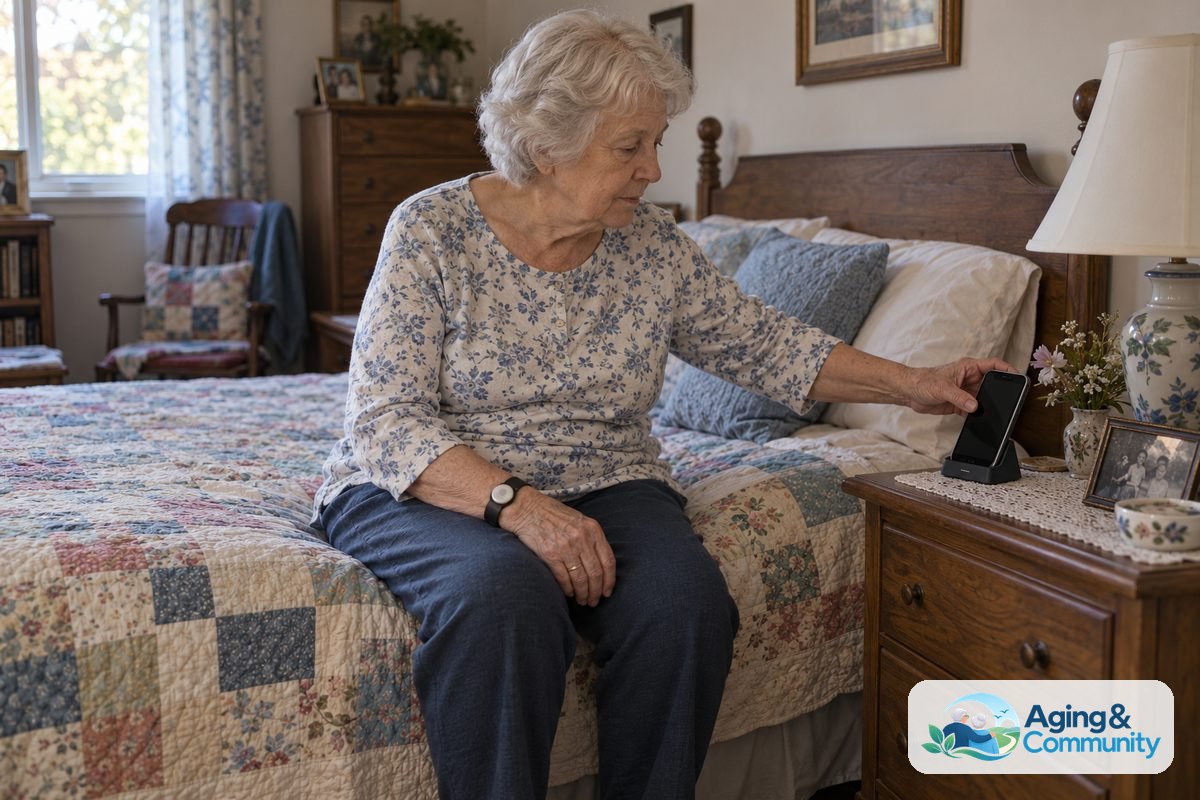
Think about daily habits before choosing one. A wearable device only helps if it is worn. A wall button only helps if it is placed where it can be reached. A phone only helps if it is charged and nearby.
A guide to fall alert devices can help families understand common features. Look for simple use, clear instructions, comfortable wear, and a plan for who gets contacted.
Smart home tools can also support safer routines. Voice-controlled lights, smart plugs, and door sensors may reduce the need to rush across a room. Keep the setup simple so it does not become another source of frustration.
- Wearable alert button: useful only if it is comfortable enough for daily wear.
- Bedside phone charger: keeps a phone close at night.
- Voice-controlled lights: can turn lights on before standing.
- Doorbell camera: may reduce rushing to the door.
- Medication reminder: can support routines when approved by the care team.
The National Institute on Aging suggests talking with a health care provider about medicines, vision, footwear, and home hazards. Products are most useful when they fit into that broader plan.
How to Choose Products Without Overbuying
It is easy to buy too many items at once. Start with the highest-use areas and the biggest daily challenges. Try to solve one problem at a time, then see whether the change is actually helping.
Choose sturdy items that match the person’s size, strength, and home layout. Read weight limits, installation needs, cleaning instructions, and return rules. If a product needs drilling or mounting, use someone who knows how to install it safely.
A broader list of home safety equipment may help you compare options by room. Use that kind of list as a planning tool, not a shopping order.
Respect comfort and choice. A product that feels embarrassing, ugly, or hard to use may stay in the closet. When possible, let the person try options, choose colors, and decide where items belong.
- Start small: choose one or two changes in the most-used rooms.
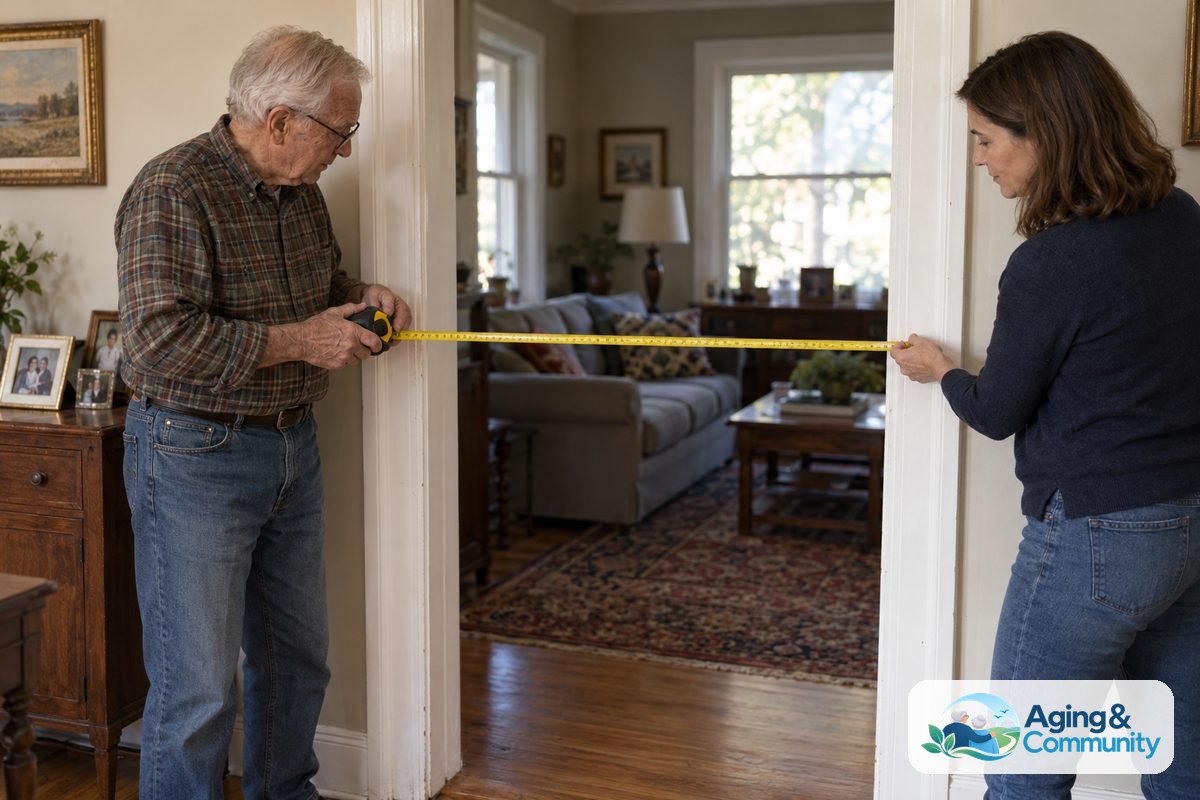
- Measure first: check toilet height, tub width, doorway width, and chair height.
- Check stability: avoid items that slide, tip, or depend on weak surfaces.
- Ask for help: use a doctor, physical therapist, occupational therapist, or trained installer when needed.
- Review often: needs can change after illness, surgery, medication changes, or a move.
Good choices usually feel simple. They make a routine easier without adding clutter or confusion. If something makes a task harder, it may not belong in the home.
What You Can Do Next
Start with a calm walk-through of the home. Bring a notepad or use a phone to list places where footing, lighting, reach, or support could be better. Include the person who lives there so the plan fits daily life.
- Pick one room to review first, often the bathroom or bedroom path.
- Remove clutter, loose cords, and items that block walking paths.
- Add brighter lighting where shadows make steps or rugs hard to see.
- Choose one support product, such as a grab bar, shower chair, or chair with arms.
- Ask a doctor, physical therapist, or occupational therapist about balance, walking aids, medicines, vision, and home setup.
- Recheck the home after any change in health, strength, or routine.
If you are not sure where to find local help, the Eldercare Locator can connect families with community resources. You can also ask a primary care office, senior center, or local agency on aging about home safety assessments.
Frequently Asked Questions
What are the most useful fall prevention products for the home?
The most useful products are usually the ones that solve a clear daily problem. Common choices include grab bars, shower chairs, raised toilet seats, non-slip bath strips, motion night lights, sturdy shoes, and properly fitted canes or walkers.
Start with the bathroom, bedroom path, stairs, and entryway. These areas often need better lighting, clearer walking space, or stronger hand support.
Do grab bars need professional installation?
Many grab bars should be installed into wall studs or another secure support. Professional installation is often a good idea, especially in showers, near tubs, and beside toilets.
Suction handles may seem easy, but they can loosen. If you use one, check the instructions carefully and do not treat it as the same as a mounted grab bar.
Are non-slip socks enough for home safety?
Non-slip socks may help some people feel more comfortable on smooth floors, but they are not the only thing to consider. They can twist, stretch, or lose grip over time.
Many people do better with supportive shoes that have a closed back and a stable sole. If foot pain, swelling, or numbness is present, ask a doctor or foot care professional for guidance.
Should every room have fall prevention products?
Not every room needs special equipment. Focus on rooms used every day and places where the person turns, reaches, steps up, or gets in and out of a chair, bed, tub, or car.
A clear, well-lit room with stable furniture may need very little. A crowded room with loose rugs or poor lighting may need attention first.
How do I know if a walker or cane is the right choice?
A cane or walker should match the person’s balance, strength, height, and walking pattern. Borrowing one without fitting it can make it harder to use safely.
Ask a physical therapist or doctor for advice before choosing or adjusting a mobility aid. They can also show how to use it on turns, stairs, and uneven surfaces.
Can home products replace a medical checkup?
No. Home products can support safer routines, but they do not replace medical advice. Falls can be linked to vision, medicines, strength, balance, blood pressure, footwear, or home hazards.
If falls, near falls, dizziness, or new weakness are happening, talk with a doctor. An occupational therapist or physical therapist may also help match home changes to daily needs.