

Learning how to use recliner sofa controls helps you rest comfortably and move with confidence every day. Most models operate with a simple manual lever, a hidden release latch, or convenient power buttons on the side. Taking a few moments to understand the basic mechanics ensures you can sit back, raise your feet, and return to an upright position with ease.
A reclining couch provides extra support for your back, legs, and neck while you read, watch television, or visit with family. For older adults, having a comfortable place to rest that is also easy to get out of makes daily living much more enjoyable. Setting up your living room furniture correctly helps support independence when aging in place comfortably at home.

Steps for Using a Recliner Sofa
- Clear the floor area: Make sure the space in front of and behind your seat is free of blankets, cords, throw pillows, and pet toys before you change positions.
- Sit down gently: Back up slowly until the backs of your knees touch the cushion, place your hands flat on the armrests, and lower your hips down smoothly.
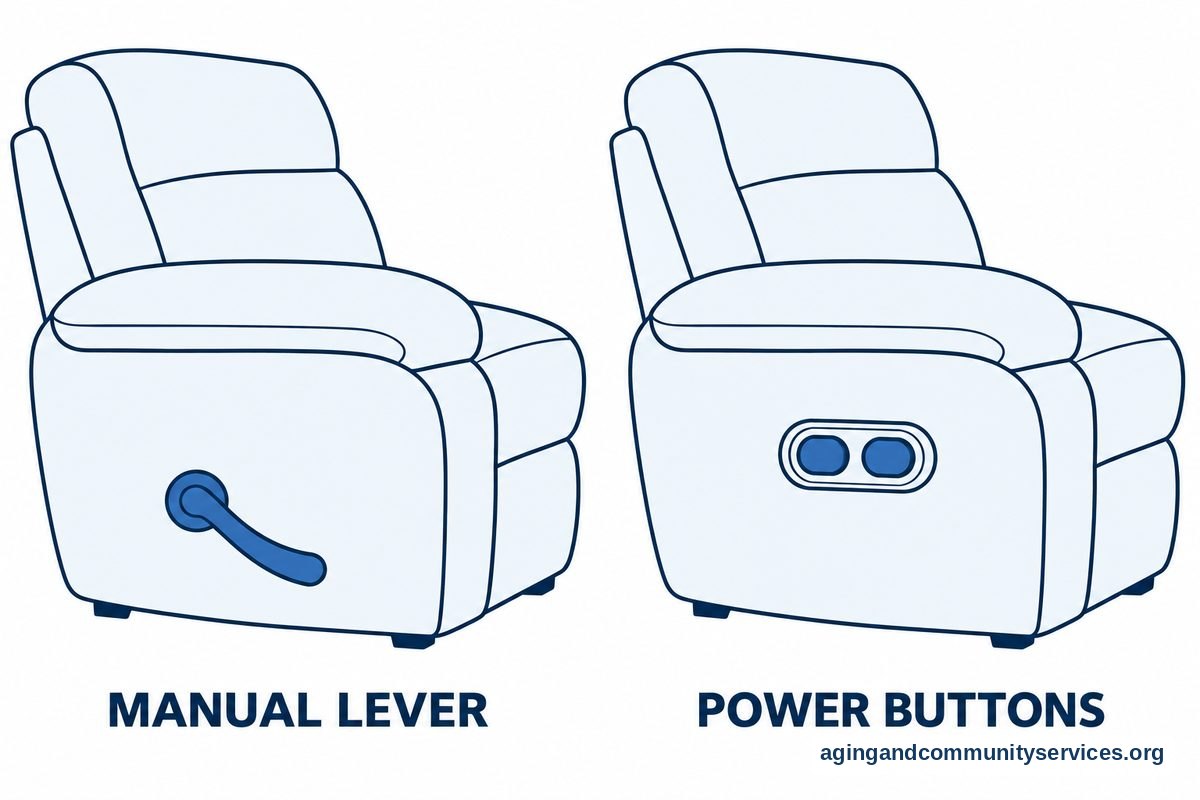
- Find the reclining control: Locate the release handle, pull latch, or electric push buttons positioned along the outer side of your armrest.
- Lean back with care: Pull the manual lever or press the back arrow button while gently shifting your upper body weight backward against the cushion.
- Raise the footrest: Continue engaging the control until the built-in leg rest lifts up to support your lower legs and feet completely.
- Adjust for support: Stop the motion once your hips, lower back, and knees feel fully supported without straining your neck.
- Return to upright before standing: Push the close button or lean forward and press your heels down on a manual footrest until it clicks firmly shut before you try to stand.
- Stand up with both feet flat: Slide your hips forward, plant both feet flat on the floor, grip the armrests firmly, and push straight upward to stand.

Common Mistakes to Avoid
- Standing up while the footrest is still extended, which can cause trips or tip the furniture frame forward.
- Reaching far over the armrest to grab fallen items, which throws your center of balance off entirely.
- Allowing children or pets to crawl near the metal scissors mechanism underneath the raised footrest.
- Dropping heavily into the seat instead of lowering yourself down using the steady armrests for balance.
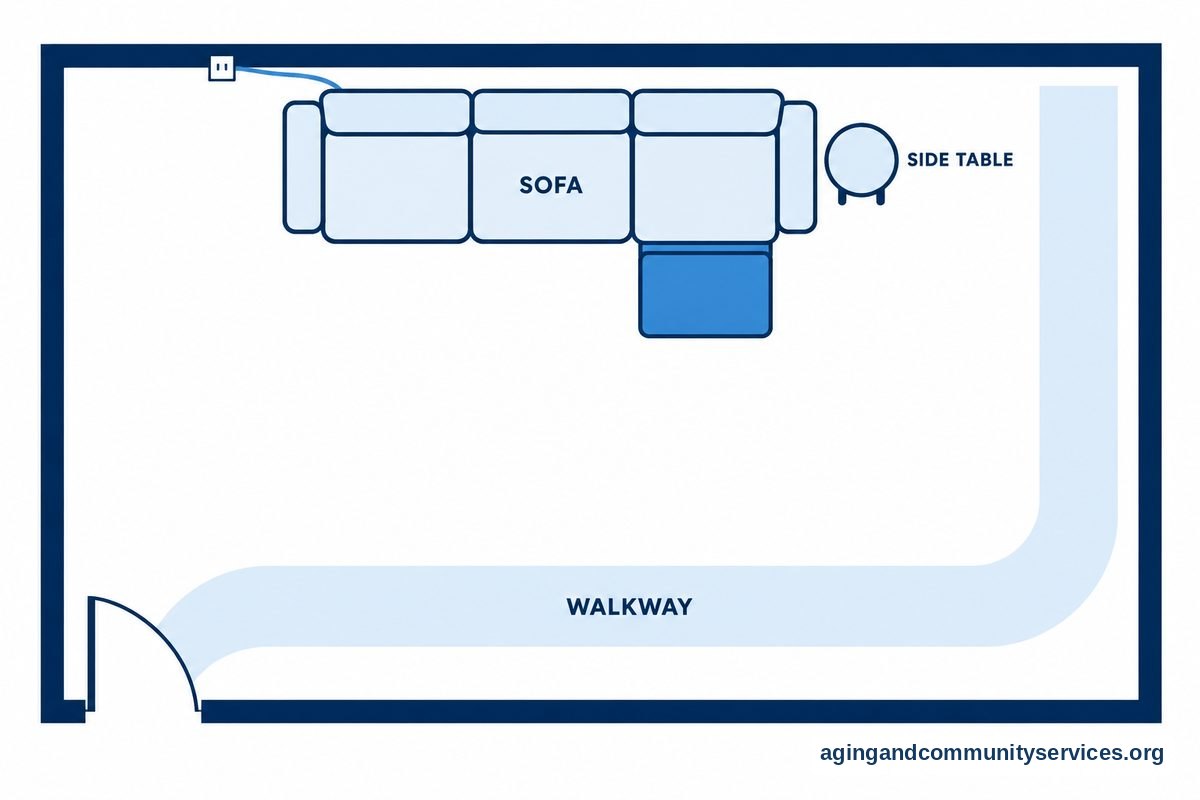
- Leaving cords across walk spaces if your couch uses electric power wall adapters and transformers.
- Sleeping completely flat without proper neck support if your model reclines into a deep horizontal angle.
When to Call for Help or Professional Advice
Sometimes furniture needs professional service, or your physical needs change over time. If the reclining mechanism sticks, grinds loudly, or refuses to close completely, stop using the chair until a furniture technician can look at it. You can call the store where you bought the couch or reach out to a local furniture repair company. Describe the exact issue clearly, such as whether the power remote stopped glowing or the manual spring feels loose.
If standing up from your sofa starts causing hip pain, dizziness, or knee strain, it is wise to consult a healthcare provider. A physical therapist or occupational therapist can review your seated posture and suggest personalized movement strategies. You can also reach out to the Eldercare Locator to connect with community services that assist with home safety and everyday mobility.
Understanding Manual Versus Power Reclining Couches
Recliner sofas generally come in two main styles: manual and power. Manual models use your body weight combined with a lever or pull tab to lift the footrest and tilt the backrest. These units work without electricity, meaning you never have to worry about cords or power outages. However, locking the footrest back down usually requires leg strength to push the footboard until it latches shut.
Power reclining sofas use small electric motors operated by buttons, a wand remote, or a toggle switch. These models allow you to stop the back and footrest at any angle you find comfortable. They require very little physical effort to adjust, making them popular for people with limited grip strength or joint discomfort. Many owners find it helpful to read about how to use a recliner with electric controls so they feel confident handling the power buttons.
Setting Up Your Space for Safe Movement
Where you place your furniture matters just as much as how you operate it. Reclining furniture requires clearance space in front for the footrest to rise, as well as several inches behind the couch so the back does not rub against your drywall. Keep side tables close enough that you can set down a glass of water without twisting your spine or leaning awkwardly over the armrest.
Good lighting and clear walkways around the sofa make moving between rooms much safer throughout the day and evening. Practical home modifications can lower the risk of accidents according to guidelines on falls and falls prevention shared by public health experts. Keep rugs smoothed down flat and ensure power cords run along walls rather than across open walking paths.
| Feature | Manual Reclining Sofa | Power Reclining Sofa |
|---|---|---|
| Adjustment Method | Side lever, pull tab, or body push | Side buttons or wired hand remote |
| Physical Effort | Moderate leg effort to lock footrest | Very low effort with push buttons |
| Power Source | No electricity required | Standard wall outlet or backup battery |
| Position Options | Usually two or three preset stops | Infinite smooth adjustment stops |
Choosing the Right Reclining Furniture for Your Needs
If you are planning to purchase new living room seating, take your time evaluating different seat depths, cushion firmness levels, and armrest heights. You can review detailed guides on how to choose a recliner that matches your height and mobility level. Deep cushions might feel cozy at first, but firmer cushions make standing up much easier on your knees and hips.
For people who need help moving from a seated position to a full stand, a standard reclining couch might not offer enough lift assistance. In those situations, exploring whether does medicare cover lift chair recliners can help you understand insurance rules for specialized lift mechanisms. While multi-seat sofas rarely feature motorized seat-lift functions, standalone lift chairs provide that extra boost when standing up becomes difficult.
Resting and Recovering in a Recliner
Many people find that an adjustable sofa offers great comfort when recovering from minor aches or routine medical procedures. Elevating the legs while reading or resting can help you relax comfortably throughout the afternoon. If you are recovering from an injury, you might want to look into how to use a recliner after shoulder surgery to learn how extra pillows can support your arms and spine.
Always make sure your neck remains supported with a small pillow if you plan to close your eyes for an afternoon nap. Keep your remote controls, phone, and reading glasses within arm reach on a sturdy side table. Staying organized prevents unnecessary reaching that could strain healing muscles or compromise your balance.

Frequently Asked Questions
How do I close a manual recliner sofa footrest if my legs are not strong enough?
If pressing with your heels feels difficult, lean your chest forward to bring your body weight over your knees first. You can also grip the armrests firmly and push down through your legs in one steady motion. If closing the latch remains uncomfortable, using a model with an external lever or switching to a power button design provides a much easier solution.
Can I leave the footrest raised when I get up from the sofa?
You should always close the footrest completely before trying to stand up, similar to learning how to use a walker safely. Trying to climb over an open footrest creates a significant tripping hazard and can bend the metal frame underneath the seat. Taking a few seconds to return the seat to an upright position gives your feet solid contact with the floor.
How much space does a recliner sofa need from the wall?
Standard reclining sofas usually need twelve to fourteen inches of wall clearance so the seat back can tilt back fully. Wall-hugger models are designed specifically for tighter rooms and may only need three to five inches of space. Check your furniture manual to find the exact clearance needed before sliding your couch into place.
What should I do if a power recliner sofa stops working while reclined?
First, check that the power cord has not pulled loose from the wall outlet or the back of the sofa. Next, check if the wall outlet has power by testing a nearby lamp. Many modern power sofas also include a battery backup compartment inside the motor housing that can return the seat upright during a temporary electrical outage.
Is it safe to sleep on a recliner sofa every night?
While an occasional afternoon nap is pleasant, sleeping in a recliner every night may not provide balanced support for your spine and hips. If you rest in a recliner frequently, ask your doctor or physical therapist about proper sleeping posture and whether supportive pillows can help keep your body aligned.